






Building a 3D Christmas House That People Want to Walk Into
When we began this project, we were not thinking about lights first. We were thinking about space.
The brief was simple: create something outdoors that people would naturally walk toward, not just look at from a distance. Something that could stand in an open area and immediately feel like Christmas.
That idea shaped everything we did next.
Why We Chose a Fully 3D Structure
At the early stage, we considered flat motif lights. They are common and easy to install. But they felt passive.
We wanted visitors to move around the structure, see it from different angles, and feel part of the scene. That is why we decided on a fully three-dimensional house design.
A house feels familiar. It feels warm. People understand it instantly.
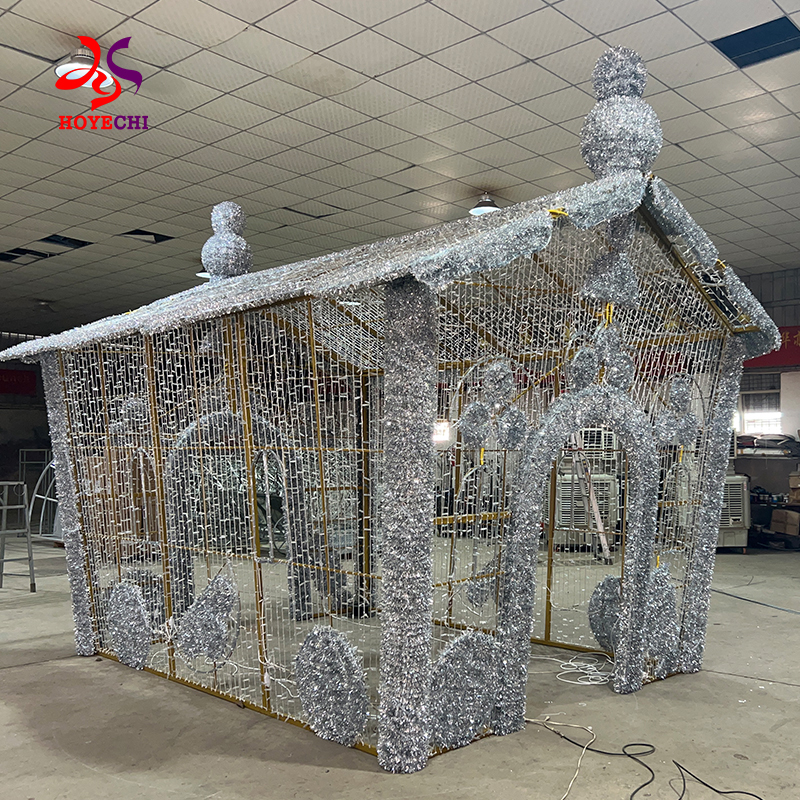
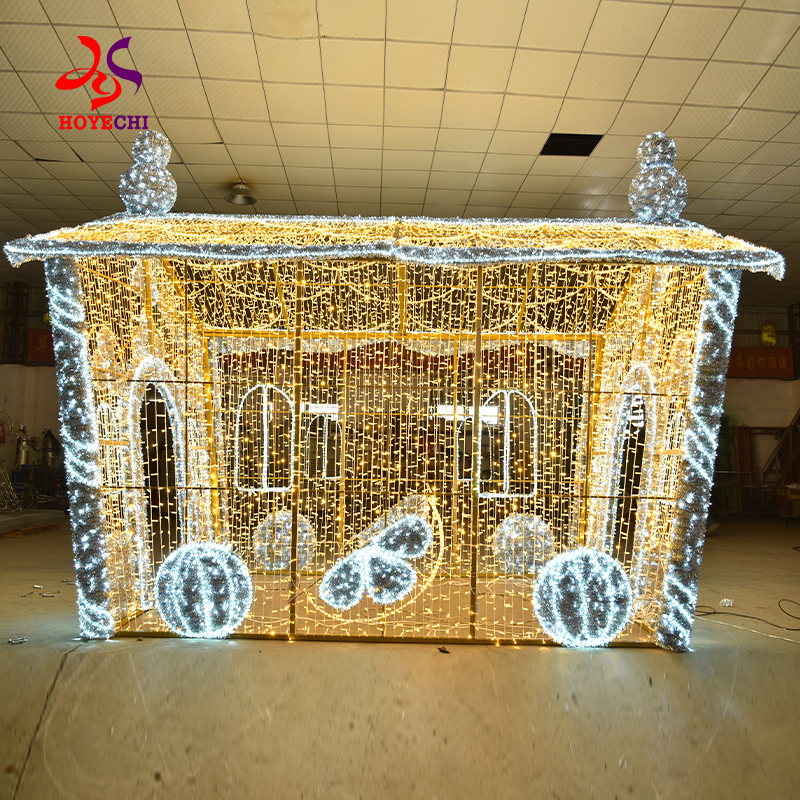
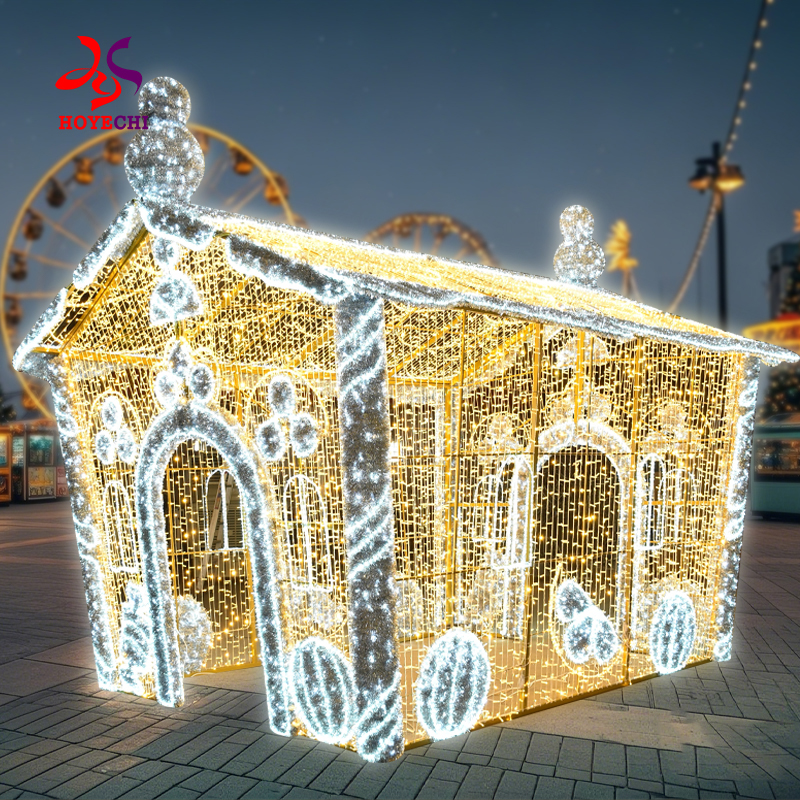
Our outdoor 3D Christmas house light display follows this idea, with a pitched roof, illuminated windows and a clearly defined doorway. The architectural details help the house remain recognizable from different viewing angles.
Balancing Design with Real-World Conditions
From a manufacturing perspective, a 3D structure always brings challenges.
A Strong but Clean Frame
The structure needs enough strength to support the installation without making the house look bulky.
Comfortable Illumination
The lighting should define the house clearly without becoming unnecessarily harsh.
Outdoor Reliability
The decoration must remain suitable for extended seasonal use, not just a short indoor test.
For this project, we focused on clean structural lines and a solid metal framework. The lighting was arranged to highlight depth instead of simply adding more brightness.
Warm white light filled the interior, while cool white outlines defined the shape. The contrast separated the windows, walls and roof, giving the house a sense of depth after dark.
The goal was clarity, not excess.
Building for the Outdoors, Not the Showroom
We design many decorations that look good indoors. This one had to perform outdoors.
Every cable route, connection point and mounting position was planned with weather and long operating hours in mind. Waterproof lighting, stable bases and secure wiring were not optional. They were essential.
The metal frame also had to be practical for transport and assembly. Large decorative structures need clearly arranged components and accessible electrical connections, especially when they are installed far from the manufacturing site.
We always remind ourselves: outdoor decorations are only impressive if they still work after weeks of exposure.
Planning the Christmas Scene Around the House
We never see a large Christmas house as something that has to stand completely alone. Its surroundings affect the way people approach it, how they take photographs and where they move next.
A Christmas tree can establish the main visual landmark, while illuminated arches help define entrances and routes. Animal sculptures can fill the spaces between larger structures without hiding the house itself.
These elements do not need to compete with one another. The strongest arrangements give each decoration enough room to be seen while keeping the overall scene connected.
The First Time We Turned the Lights On
There is a quiet moment in the factory before the lights come on.
When we powered up the house for the first full test, the structure changed instantly. The metal frame faded into the background, and what remained was a warm, glowing space.
It no longer felt like a product. It felt like a place.
That moment is always important to us. It tells us whether we got it right.
What This Project Reinforced for Us
This project reminded us that successful holiday lighting is not about using more lights or bigger structures.
It is about understanding how people move, where they stop and what makes them feel welcome.
The same principle can be applied to other shapes. A walk-through Christmas ornament arch, for example, creates an enclosed illuminated space through a completely different structure. What matters is how the installation fits into the visitor’s experience.
Each project sharpens our ability to design large-scale outdoor decorations that are visually strong, structurally reliable and ready for real-world use.
Looking Ahead
Every installation teaches us something new.
This 3D Christmas house is one example of how we approach commercial holiday projects — carefully, thoughtfully and with respect for both design and durability.
And it continues to influence how we build the next one.
PRODUCT REFERENCE
Outdoor 3D Christmas House Light Display
Explore the house structure, reference dimensions, lighting options and available custom configurations.