





How to Plan a 2027 Downtown Holiday Lighting Program for BIDs and Main Street Teams
A downtown holiday lighting program becomes easier to scope when a BID, Main Street organization, or downtown-district team first defines the program it owns. Before detailed procurement, create three linked records: a district program charter, a public/private asset and responsibility map, and a comparable supplier-scope brief. Together, they identify the program boundary, available evidence, decision roles, requested work packages, and issues that must remain unresolved. They do not select decorations, settle local responsibilities, or replace an RFP, contract, or technical review. In this guide, 2027 is simply the buyer's planning-cycle label. It supplies no universal dates, requirements, or schedule. The result is a buyer-owned program wrapper that helps different stakeholders and potential suppliers discuss the same scope without treating assumptions as confirmed facts.
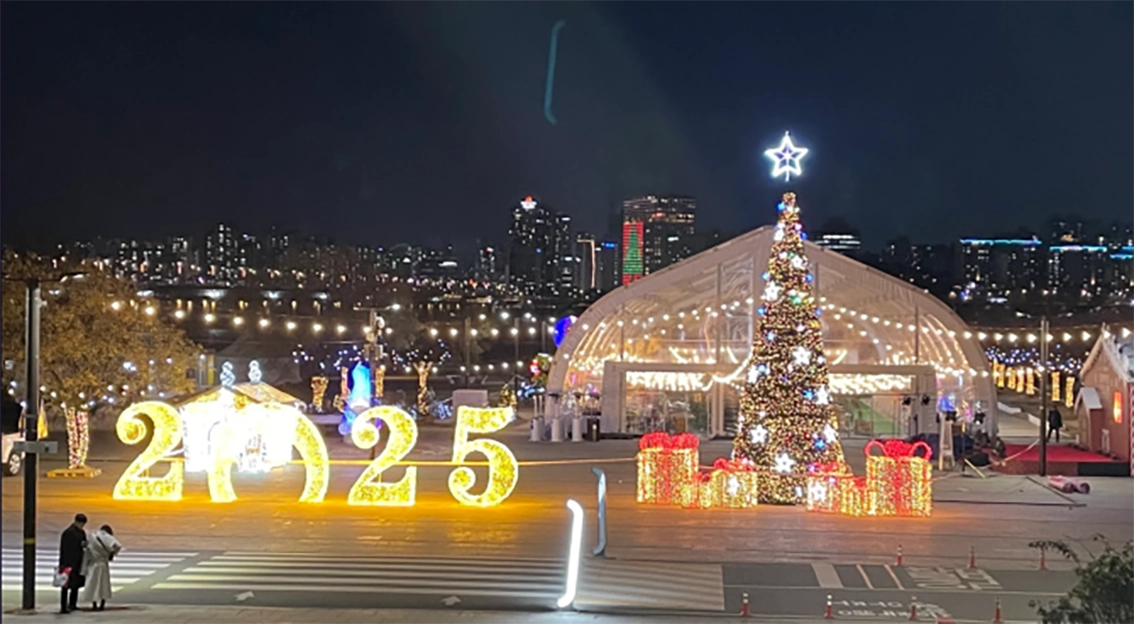
Define the program before discussing decorations
In this guide, a downtown holiday lighting program is the buyer's internal wrapper for a district boundary, included and excluded locations, decision ownership, evidence status, requested supplier-scope packages, and unresolved issues. It is not a turnkey service definition, a citywide design, or a list of products for streets and public spaces.
Start by identifying the organization that is sponsoring or issuing the program. Then record the source used to define the district boundary and the locations included within it. Organization names, legal forms, authority, funding arrangements, asset control, and decision rights can vary by place. The team must confirm its own entity and responsible decision owner instead of assuming that every BID or Main Street organization works the same way.
Use 2027 as a planning-cycle label, not a universal schedule
The year in the title tells the reader which planning cycle is being prepared. It does not establish a start date, procurement deadline, approval period, installation window, or supplier lead time. Enter dates only from the buyer's current project records and responsible parties. If no approved schedule exists, leave it out of the program charter until the buyer confirms it.
Stop if the issuer or boundary is unclear
An unclear issuer or district boundary can change every later record: which locations are included, who can make a decision, what evidence may be shared, and what suppliers are being asked to address. Keep the program unresolved until the responsible organization confirms the issuer, boundary reference, included-location list, and decision authority.
Build the district program charter
The three artifacts work in sequence. The charter defines the program wrapper. The asset and responsibility map then records control, evidence, and decision questions for locations already included. The supplier-scope brief uses those two records to give potential suppliers the same high-level inputs. Do not begin with products and attempt to reconstruct the program around them.
Copy this charter and complete it from buyer-approved records:
| Charter field | Buyer entry or instruction |
|---|---|
| Program working name and planning cycle | Enter the buyer-owned name; use 2027 only if it is the buyer's actual planning cycle. |
| Sponsor / issuer | Enter the verified organization name. |
| Program decision owner | Name the role authorized by this organization; do not assume a title. |
| District boundary reference | Cite the approved map or document, including its version and date. |
| Included location list | List corridors, gateways, plazas, or nodes by identifier only; do not recommend decorations. |
| Explicit exclusions | Record locations, assets, tenant or storefront areas, and work packages outside this program. |
| Program purpose | State the buyer-defined operational or visual purpose without promising traffic, revenue, or return. |
| Public/private control question | Identify which included locations require an owner or control check. |
| Available program evidence | List maps, photos, inventories, existing records, and approved references. |
| Missing evidence and owner | Name the missing item and the party expected to provide or confirm it. |
| Procurement route or status | Record the buyer's current state, such as an informal inquiry, budgetary discussion, RFQ, RFP, or another defined route; this is not legal advice. |
| Desired supplier-scope packages | State which high-level packages the buyer wants potential suppliers to address. |
| Program exclusions from supplier response | Identify work retained by the buyer or another party, or work not yet released. |
| Blocking issue / next checkpoint | Record the issue, next owner, acceptable evidence, and decision checkpoint. |
| Charter status | Select READY, UNRESOLVED, or ROUTE, with a recorded basis. |
Version control matters because a changed map or location list can alter the supplier discussion. Keep the source and version beside every boundary, location list, or evidence pack. A marketing map, an old presentation, and a current buyer-approved boundary are not automatically interchangeable. If the organization has not approved the source, label it as unconfirmed rather than treating it as the program boundary.

Record the decision owner
The sponsor, evidence provider, reviewer, and decision owner may be different roles. Record the role that can approve the charter for this organization and the role that must supply each missing input. The charter should not invent a title or assign authority merely because a similar organization uses that arrangement elsewhere.
Local-entity rule: Verify the organization's name, authority, funding context, procurement route, and decision rights with the responsible local party. A program charter records the result; it does not create those rights.
Keep included locations separate from decoration choices
The included-location list identifies where the program applies. It does not decide what decoration, product, format, quantity, or layout belongs at each location. If the team still needs broader public-space inspiration after the charter is stable, that is a separate reader job. Keep location IDs neutral so the same charter can support later work without pre-approving a product or design.
Map public and private asset responsibilities
Once locations are included, build a map of control, evidence, and responsibility. Here, “public” and “private” are prompts to check the buyer's own records. The labels do not establish ownership, permission, access, or liability. A street, pole, façade, plaza, tree, utility point, or storefront must not be assigned to a party without buyer-approved evidence.
Use one row for each included location or asset reference. Duplicate the blank row as needed, but do not add zone-purpose, product-mix, budget, priority, or layout fields.
| Included location or asset reference | Control/owner status | Evidence currently held | Missing control/evidence question | Evidence provider | Decision/approval owner | Buyer-requested supplier scope | Work retained elsewhere | Next responsible party | Row status |
|---|---|---|---|---|---|---|---|---|---|
| Enter an ID or name only. | Confirmed or needs confirmation. | Cite the map, photo, inventory, or record. | State one unresolved question. | Enter a verified role or entity. | Enter a verified role or entity. | State the high-level package requested; this is not a supplier promise. | Identify buyer, local-party, or other retained scope. | Name the role and requested evidence. | READY, UNRESOLVED, or EXCLUDED. |
The map is useful because a supplier-scope question can be premature even when a location name is known. The team may still lack a controlled boundary reference, evidence about the asset, a decision role, or confirmation that a requested package belongs in the supplier response. The correct action is to expose the gap, not answer it with a general assumption.
Separate control, evidence and decision roles
For every row, ask three different questions. Who or what record supports the control status? Who can provide the missing evidence? Who can approve the buyer's next decision? A single role may fill more than one field in a particular project, but the article does not assume that it does. Record the arrangement supported by the buyer's own sources.
The supplier-scope column also requires care. It states what the buyer wants a potential supplier to address at a high level. It does not confirm that any named supplier offers that package, and it does not transfer work retained by the buyer, municipality, utility, property owner, contractor, or another party.
Escalate unknowns without answering them
When control, access, evidence, or responsibility is unclear, record one precise question and the party expected to answer it. Examples of question formats include: “Which current record identifies the controlling party?” or “Which role confirms whether this work package is included?” These are neutral requests, not ownership, permit, electrical, structural, installation, safety, or accessibility conclusions.
Use the row status UNRESOLVED when the missing answer could alter whether the location stays inside the program or what suppliers are asked to address. Use EXCLUDED only when the buyer has recorded a basis for keeping that location, asset, or work package outside the current program.
Define the supplier-scope packages you want compared
Begin this brief only after the charter and responsibility map are sufficiently stable. Comparability comes from giving potential suppliers the same buyer-approved inputs and asking them to address the same high-level response fields. It does not mean suppliers, products, services, qualifications, quotations, or prices are equivalent.
Terms such as design input, supply, installation, maintenance, removal, and storage are buyer-requested categories in this tool. They are not assumed inclusions and do not describe Hyclight's service scope. The buyer must confirm which packages are requested, retained elsewhere, excluded, or still unresolved for the actual project.
| Supplier-brief field | Buyer-controlled content |
|---|---|
| Program charter reference | Cite the approved charter version and date. |
| Included/excluded location references | Use the same identifiers as the charter and responsibility map. |
| Buyer objective for this response | State the decision the response should support. |
| High-level packages to address | List only the categories the buyer wants addressed; keep actual responsibility subject to project confirmation. |
| Buyer-supplied evidence | List maps, photos, inventories, and confirmed inputs made equally available. |
| Evidence still pending | Name the missing item, responsible owner, and expected checkpoint. |
| Supplier response boundary | State which packages and questions to address and which to exclude. |
| Required assumption/exclusion statement | Ask each supplier to identify what its proposed scope assumes or excludes. |
| Responsibility interface response | Ask each supplier to state its proposed boundary against buyer or third-party work. |
| Product/specification detail route | Send detailed fields to the existing procurement or product owner rather than duplicating them here. |
| Open issue response | Ask the supplier to identify blockers instead of silently pricing assumptions. |
| Comparable-review status | Select READY TO REVIEW, NOT COMPARABLE — MISSING COMMON INPUT, or HOLD. |
State assumptions and exclusions
Every response should make its proposed boundary visible. If a potential supplier is responding to only part of the requested package, the response should state that boundary. If the response depends on an unresolved buyer input, it should identify the assumption rather than conceal it. This is a scope-clarity request, not a contract clause or bid-evaluation method.
Give each supplier the same approved charter version, included/excluded list, and evidence pack. If one receives newer or broader inputs, pause the comparison or update the common package before review. The aim is to compare responses against one buyer-defined baseline, not to declare prices or solutions interchangeable.
Keep detailed procurement fields with the procurement owner
This program brief stops at high-level packages, shared evidence, responsibility interfaces, assumptions, exclusions, and blockers. Exact products, dimensions, electrical data, packaging, logistics, installation details, destination documents, commercial terms, and other detailed buying inputs belong in the commercial holiday decoration procurement checklist. Do not duplicate them here.
Use an unresolved-responsibility gate before product selection
An issue remains unresolved when a missing owner or evidence item could change the included program scope or the boundary of a supplier response. Stop before product selection or response comparison if any of these conditions applies:
- the sponsor, issuer, or decision owner has not been confirmed;
- the district boundary or included/excluded list lacks an approved source;
- control or evidence status for an included location could change its treatment;
- potential suppliers have not received the same evidence pack;
- a requested package overlaps work retained by another party; or
- no responsible party has been named for a blocking question.
For each blocker, record the missing answer, acceptable evidence, responsible owner, and next decision checkpoint. “Acceptable evidence” means the form the buyer's responsible party will recognize for this decision; the article does not prescribe it. Keep the status UNRESOLVED — OWNER OR EVIDENCE REQUIRED until the gap is closed or route the question to the correct owner.
The other controlled outcomes are READY FOR DETAILED PROCUREMENT INPUTS, READY FOR COMPARABLE SUPPLIER-SCOPE DISCUSSION, and ROUTE TO THE CORRECT EXISTING OWNER. These are workflow states only. They do not declare legal, technical, procurement, product, or approval readiness.
Route detailed planning to the correct owner
A district program brief should remain compact. When the reader's question changes, move to the page that owns the next job instead of expanding this article into a city guide, zone register, pole-layout manual, or procurement checklist.
City decoration and product discovery
If the team still needs broad scene or product context for streets and public spaces, explore city Christmas decorations for streets and public spaces. That page owns the broader context. The present guide does not recommend what belongs at a corridor, gateway, plaza, or node.
Zone-level planning
Once the district boundary and control questions are established, teams that need to define purpose, evidence, constraints, and dependencies for individual zones can build a buyer-owned commercial Christmas display zone register. The district responsibility map does not replace that work.
Repeated-pole layout
If the real question concerns spacing, quantity, rhythm, density, or route layout for repeated pole motifs, plan repeated pole motif lights for a shopping street. This article may record that the pole decision is unresolved, but it provides no layout rule.
Detailed procurement inputs
When the charter, responsibility map, and supplier-scope brief are ready, move detailed product, site, logistics, installation, document, and commercial inputs into the procurement owner linked above. This handoff protects both pages: the program brief defines the common wrapper, while procurement develops the detailed buying record.
Review the program brief for comparability
Before moving forward, apply this five-point completion check:
- Same charter version: every reviewer and potential supplier uses the same approved charter reference.
- Same location scope: included and excluded identifiers match across the charter, responsibility map, and supplier brief.
- Same evidence pack: shared maps, photos, inventories, and confirmed inputs are the same controlled versions.
- Explicit package boundaries: requested packages, retained work, assumptions, and exclusions are visible.
- Visible unresolved items: every blocker has a named evidence request, responsible owner, and next checkpoint.
Return the program to UNRESOLVED if a missing or inconsistent item could change the included scope or supplier-response boundary. Completion of this check does not establish RFP compliance, technical completeness, legal approval, or price comparability.
Frequently asked questions
What is a downtown holiday lighting program in this guide?
It is a buyer-owned wrapper for the district boundary, included locations, decision roles, evidence status, desired supplier-scope packages, and unresolved issues. It is not a product-selection plan, event program, turnkey service description, formal RFP, contract, or technical approval document.
What should a BID or Main Street team define before requesting supplier proposals?
Confirm the program issuer and decision owner, cite the district boundary, list included and excluded locations, record available and missing evidence, define the high-level packages suppliers should address, and expose open issues that could change the requested scope.
How should a district team handle public and private assets?
For its own project, the team should record the control status, supporting evidence, evidence provider, decision owner, unresolved question, and next responsible party. The public/private label starts a verification step; this guide does not determine ownership, permission, access, or liability.
Does this program brief replace an RFP or local legal and technical review?
No. It is a pre-procurement scoping record. Formal procurement, legal, electrical, structural, installation, safety, accessibility, and local-authority decisions remain with the responsible parties. The brief makes questions and boundaries visible; it does not decide or approve them.
How can supplier responses be made more comparable?
Give every potential supplier the same approved charter version, location scope, evidence pack, high-level package questions, and unresolved items. Ask each to state assumptions, exclusions, and responsibility interfaces. This common baseline does not make quotations, products, services, or prices equivalent.
When should the program remain unresolved?
Keep the program unresolved when the issuer or decision authority, district boundary, asset control, evidence availability, or scope responsibility could change included locations or what suppliers are being asked to address. Record the missing evidence, owner, and next checkpoint.
What does 2027 change in this planning guide?
Only the planning-cycle label. The buyer must enter its own dates, procurement route, decision checkpoints, and project requirements from current approved sources. This guide supplies no 2027 law, schedule, lead time, market trend, forecast, event, or project fact.
Before starting a project-specific supplier discussion, prepare the approved district charter, completed responsibility map, common evidence pack, and clearly marked unresolved scope questions. Share only buyer-confirmed inputs. This step does not promise a survey, RFP, authority coordination, design, installation, management, quotation, response time, delivery timing, or project result.