





Vigo Christmas Lights 2026: 12 Million LEDs Across 500 Streets
Christmas preparations have already started in Vigo.
On July 29, 2026, the Spanish city began installing its new Christmas lighting programme at Porta do Sol. According to Vigo City Council, this year’s display will include more than 12 million LED lights, 7,000 decorative motifs, 2,700 trees and 1,200 arches across 500 streets.
The city has also announced new features for the coming season, although the main designs and official switch-on date have not yet been revealed.
Beginning installation in July may seem unusually early. The scale of the project makes the schedule easier to understand. Vigo is preparing a connected urban display that extends through shopping streets, public squares, neighbourhoods and visitor routes.
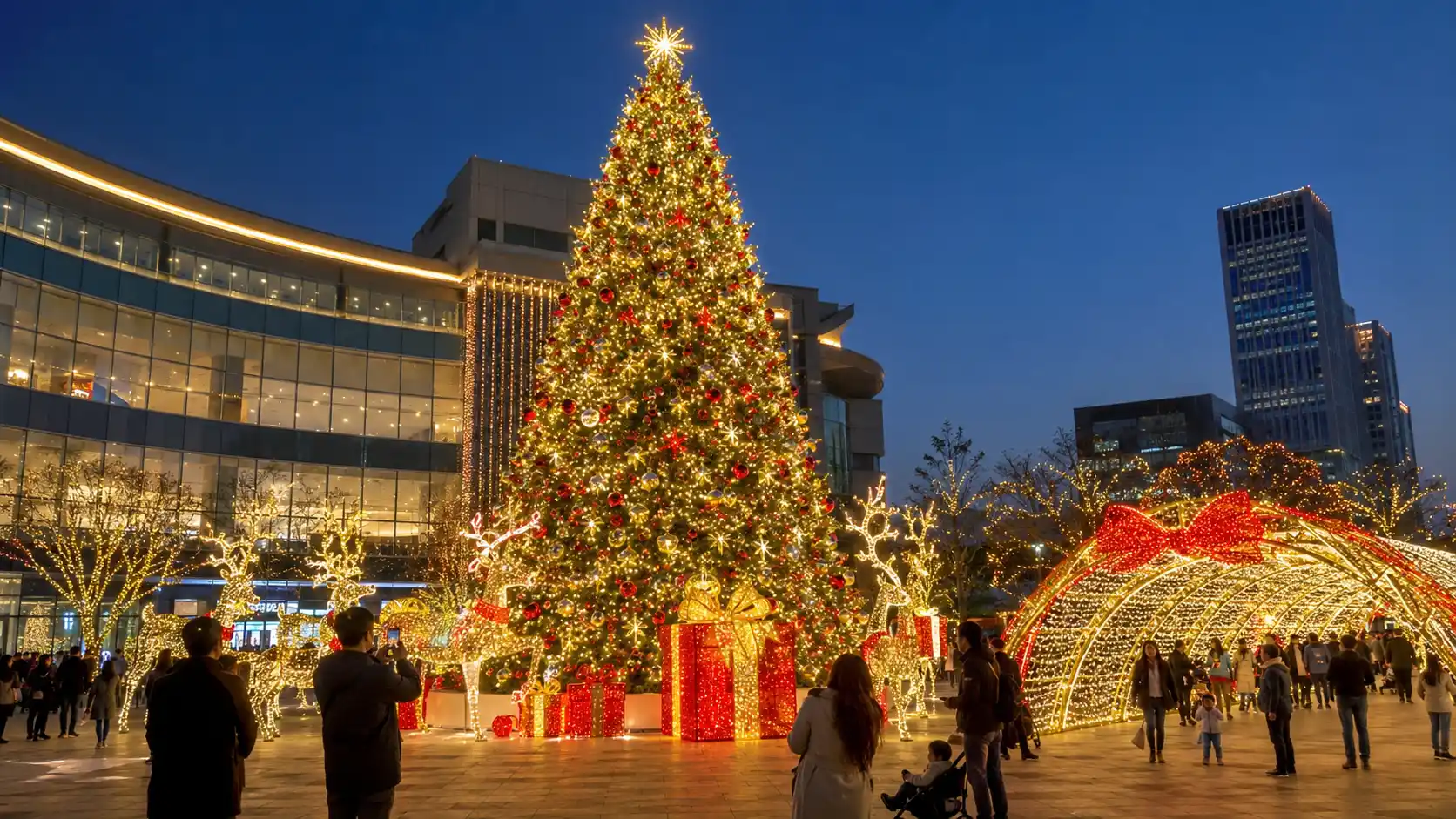
Christmas Starts in Vigo During Summer
Vigo has built an international reputation around its Christmas lighting programme.
Installation begins months before the public opening because thousands of elements must be delivered, positioned, connected and tested across different parts of the city.
The work involves much more than placing decorative lights on a few central streets. Each area presents different access conditions, electrical requirements, fixing points and traffic restrictions.
Installation teams may need to coordinate:
Road and pedestrian access
Lamp post and façade fixing points
Lifting equipment
Electrical connections
Lighting control systems
Structural inspections
Testing and maintenance
Traffic and public safety requirements
Beginning in July gives the city time to complete the work in stages rather than closing several major streets at the same time.
It also provides a longer testing period before the lights are opened to the public.
500 Streets Connected as Christmas Corridors
Vigo City Council describes the participating streets as corridors that will form a route through the city’s lighting and decorative displays.
This approach creates a continuous visitor journey.
Instead of concentrating every attraction in one square, the decorations can guide visitors through shopping districts, pedestrian streets, public plazas and surrounding neighbourhoods.
A citywide route usually needs several layers of lighting.
Large installations establish the main landmarks. Cross-street arches frame important roads. Pole-mounted motifs repeat along long avenues, while decorated trees and smaller elements maintain visual continuity between major attractions.
For streets with limited ground space, custom Christmas street pole lights can be installed directly on existing lamp posts.
Repeated pole motifs are especially useful along commercial roads and pedestrian routes. They create a consistent pattern without occupying pavements or interfering with visitor movement.
The motif shape, dimensions, LED colour and mounting structure can be adapted to the height of the pole and the overall city theme.
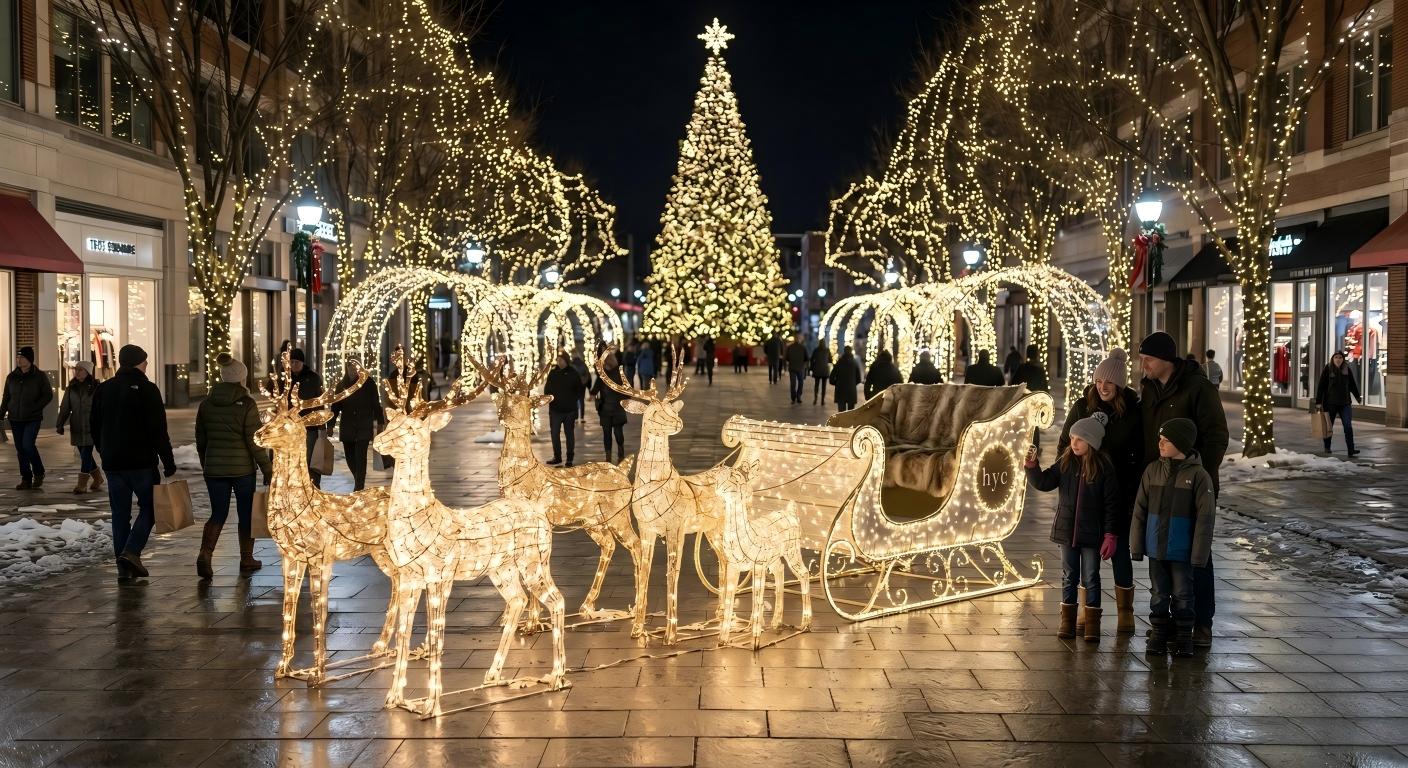
The Role of Vigo’s 1,200 Light Arches
The official 2026 programme includes 1,200 arches.
At this scale, arches are part of the city’s lighting structure rather than isolated entrance decorations.
Repeated overhead arches can visually connect a long road. Larger walk-through arches can mark the entrance to a plaza, Christmas market or public event area.
Each location requires a different design.
Cross-street arches need to account for:
Street width
Vehicle clearance
Existing lamp posts
Overhead cables
Wind exposure
Structural fixing points
Local installation regulations
Walk-through arches have a different set of requirements. Their internal opening must accommodate pedestrians, wheelchairs, pushchairs and expected visitor volumes.
Photography also affects the layout. Enough open space should remain in front of the arch for visitors to stop without blocking the main route.
An outdoor Christmas arch decoration can be customized for pedestrian streets, commercial entrances, public plazas and seasonal events.
For a more recognisable entrance, a Christmas gift box arch can create a clear transition into a Christmas market or themed display area.
The correct arch size should come from verified site measurements rather than product photographs.
A Central Landmark Within a Larger Route
A citywide lighting project still needs a central visual landmark.
In Vigo, Porta do Sol traditionally serves as one of the main Christmas locations. The central installation gives visitors a clear destination and provides a natural meeting point within the wider lighting route.
A giant Christmas tree often performs this role in a public square.
The tree must remain visually clear from several directions and viewing distances. From outside the square, visitors first see its silhouette, height and tree topper. Closer to the structure, ornaments, lighting patterns and details around the base become more important.
Tree dimensions should match the available space.
A very narrow tree can look undersized in a large open plaza. A tree with an oversized base may reduce pedestrian circulation or cover important façades and shop entrances.
Hyclight’s outdoor Christmas tree lights can be customized in height, decoration style, LED colour and lighting effect for city squares, parks, retail streets and winter events.
Larger public spaces can use a giant outdoor Christmas tree with modular sections for transport, installation and seasonal storage.
Static warm-white lighting creates a traditional appearance. Chasing lights, colour transitions and programmable effects can support a more dynamic city event.
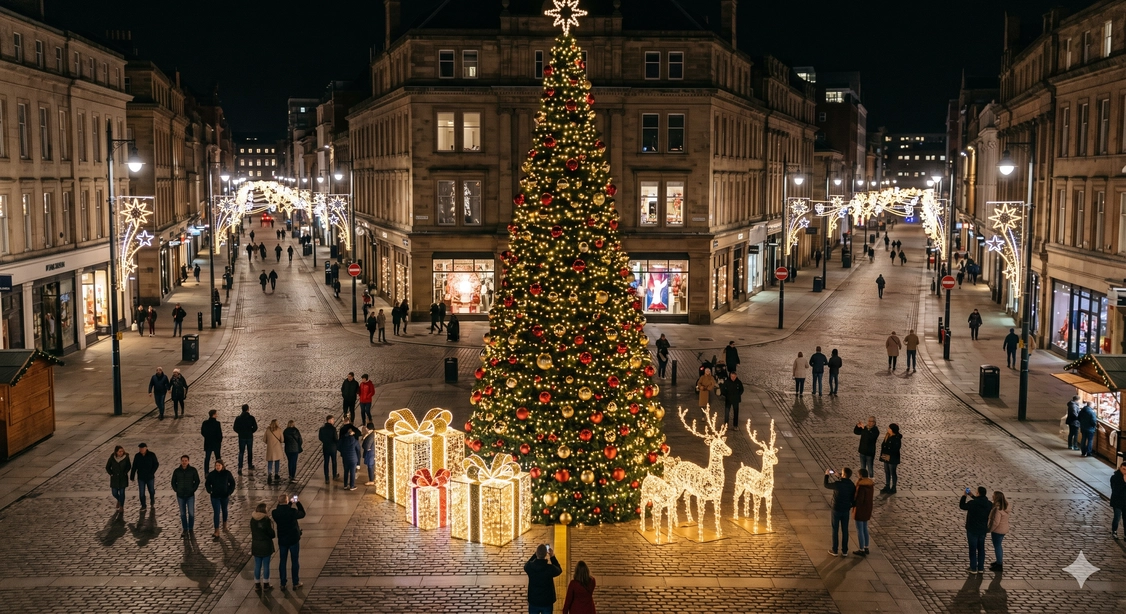
Designing a Route Around Visitor Movement
A successful city display should be planned around the way visitors move.
The route begins before people reach the main attraction. Parking areas, public transport stations, commercial streets and pedestrian entrances all influence how visitors enter the decorated area.
The most important installations should be visible from the main approach direction.
A practical route may include:
Pole lights or overhead motifs along the arrival street
A large arch at the entrance to the event area
Smaller sculptures along the walking route
A giant tree or landmark in the central square
Interactive installations at secondary plazas
Clear lighting that leads visitors toward the exit
This arrangement helps distribute visitors across several locations.
It also gives nearby shops, restaurants and activity areas more opportunities to receive foot traffic.
Placing every major decoration in one small area can create congestion while leaving surrounding streets visually disconnected.
Interactive Installations Create Stopping Points
Street lighting keeps visitors moving. Interactive installations encourage them to stop.
Walk-through baubles, tunnels, arches and oversized gift boxes can become dedicated photography areas within a longer route.
These structures need to work from three distances.
From far away, the shape should be easy to recognise. At medium distance, visitors see the lighting pattern and decorative details. At close range, the entrance, internal clearance and photography position become more important.
The giant walk-through Christmas ball is designed as a large spherical arch that visitors can enter.
The displayed model measures approximately 3.5 × 3.5 × 4 metres and can be customized in size, colour, lighting effect, voltage and decorative style.
This type of installation can be used as:
A Christmas market entrance
A public photo spot
A transition between two display areas
A landmark in a secondary plaza
Part of a park or city light route
The surrounding space is as important as the structure itself.
The project layout should include room for people waiting, taking photographs and walking past the installation.
What the July Start Reveals About Project Planning
The city’s announcement confirms the project scale but does not provide a detailed engineering explanation for the July installation date.
The work involved in decorating 500 streets provides useful context.
Installation cannot begin only a few weeks before the opening. Thousands of components must be divided into zones and installed according to local access conditions.
A typical urban Christmas lighting project may pass through the following stages:
Site Survey
The team checks street widths, pole heights, electrical access, façades, trees, road conditions and potential installation points.
Lighting Design
Decorations are assigned to different streets and public spaces. The design team coordinates colours, motifs and visual scale across the route.
Structural Development
Frames, brackets, cables and connection points are prepared according to the installation environment.
Production and Testing
Decorations are assembled and powered on before delivery. Testing helps identify damaged LEDs, wiring faults and control problems before onsite installation.
Packing and Delivery
Components are packed and labelled according to streets, zones or installation sequences.
Onsite Installation
Teams install the decorations in phases while coordinating traffic, lifting equipment and public access.
Electrical Testing
Each area is tested separately before the entire route is connected and reviewed.
Final Adjustments
Damaged components, loose connections and uneven lighting sections are corrected before the public opening.
For imported decorations, international shipping and customs clearance must also be completed before onsite installation begins.
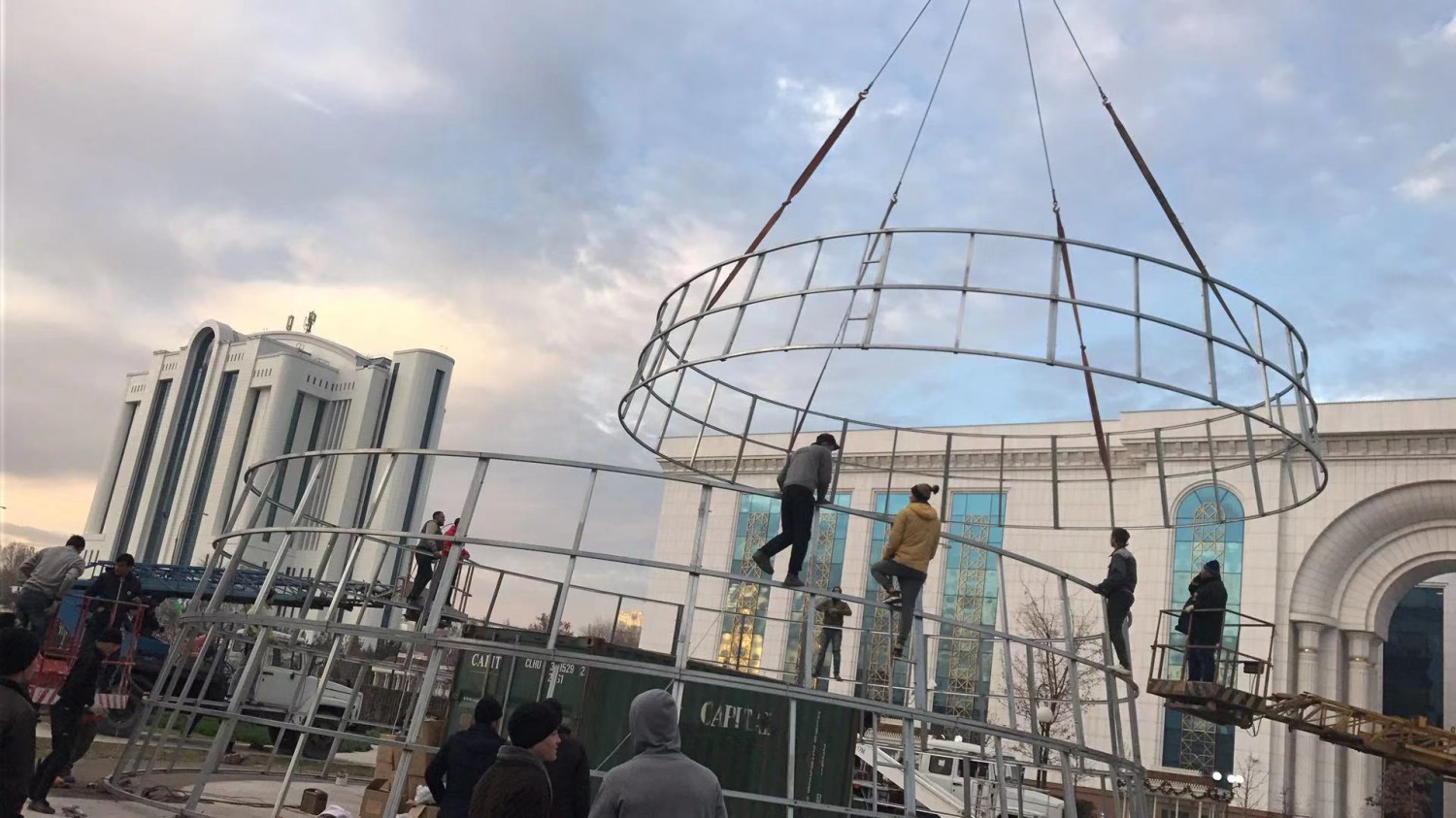
Modular Structures Reduce Installation Pressure
Large Christmas decorations are easier to manage when they use modular structures.
A modular product can be divided into transportable sections, packed in installation order and reassembled onsite.
This is especially important for giant trees, large arches and walk-through light sculptures.
Clear labelling allows the installation team to identify:
Frame sections
Connection positions
Electrical cables
Lighting zones
Decorative panels
Bolts and fixing parts
Factory trial assembly can reveal structural or connection problems before shipping.
Spare LEDs, controllers, cables, connectors and decorative parts should be packed with the main products. Small replacement components can prevent minor damage from delaying the opening of an entire display area.
Modular construction also supports dismantling and reuse after the season.
Christmas Lighting and Winter Tourism
Vigo’s Christmas programme has become closely connected with the city’s winter tourism profile.
Spain’s tourism data platform Dataestur reported that Vigo received the highest number of domestic tourists in Galicia during the 2022 Christmas season. It ranked ahead of A Coruña and Santiago de Compostela and became Spain’s 14th most popular destination among domestic tourists during the period.
Dataestur also highlighted Vigo’s combination of lighting, promotion and a programme of activities lasting almost two months.
The figures show how a coordinated Christmas programme can influence the way visitors experience a city.
Lighting helps create the visual attraction, while markets, entertainment, restaurants, hotels and public activities extend the visit.
The effect can spread beyond the central square when the lighting route reaches several shopping streets and neighbourhoods.
This makes route planning particularly important. A connected display can distribute visitors across a larger area and encourage them to explore more of the city.
Planning Lessons from Vigo’s 2026 Display
Vigo’s scale will not suit every city or commercial project.
Several parts of its planning approach can still be applied to public squares, shopping streets, parks, theme parks and Christmas markets.
Begin with the Route
Identify where visitors arrive, which streets they will follow and where they are expected to stop.
Product selection becomes easier after the route is clear.
Establish One Main Landmark
Use a giant tree, large sculpture or another recognisable installation as the visual centre.
The landmark should be visible from the main visitor approach.
Connect Streets with Repeated Elements
Pole lights, overhead motifs and tree decorations can create continuity between major attractions.
Repeated elements should share a consistent design language.
Use Arches to Mark Transitions
Arches can identify entrances, connect streets and separate different themed areas.
Their size and structure should reflect the actual installation position.
Add Interactive Photo Areas
Walk-through decorations give visitors a reason to pause and participate.
Photography areas should be separated from the main pedestrian flow whenever possible.
Plan Production and Installation Together
Product dimensions, modular sections, packing labels and fixing methods should be confirmed before manufacturing begins.
A design that looks attractive on paper must also be practical to ship, lift, connect and maintain.
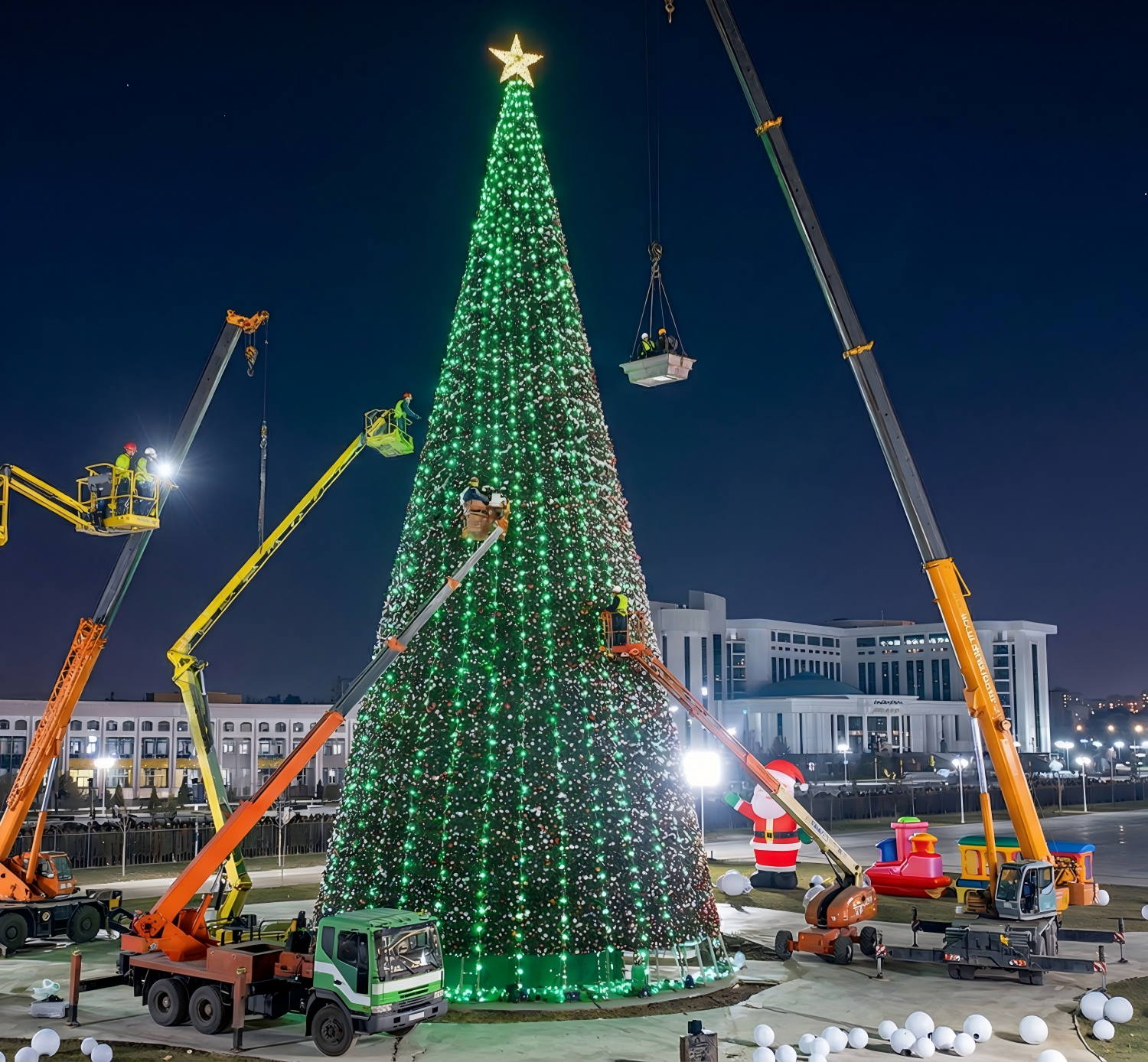
A Citywide Christmas Display Takes Months to Build
Vigo’s 2026 Christmas programme will bring more than 12 million LED lights to 500 streets.
The official plan also includes 7,000 decorative motifs, 2,700 trees and 1,200 arches, creating a route that will remain part of the city for approximately two months.
Installation began on July 29 because a citywide display requires time.
The project must move through different streets, public spaces and installation conditions before the first public switch-on.
For municipalities, event contractors and commercial property operators, Vigo offers a useful planning reference.
A large Christmas project should begin with the visitor route, main landmark and installation environment. Products can then be selected according to the role they will perform within the complete display.
The strongest projects create a connected experience from the first decorated street to the final photo location.
Frequently Asked Questions
Did Vigo officially start installing its 2026 Christmas lights?
Yes. Vigo City Council announced that installation began at Porta do Sol on July 29, 2026.
How many LED lights will Vigo use in 2026?
The city has announced more than 12 million LED lights.
How many streets will be decorated?
The official programme covers 500 streets, which will form connected Christmas corridors through the city.
How many Christmas arches are planned?
Vigo City Council’s official figure is 1,200 arches.
What other decorations are included?
The city has announced 7,000 decorative motifs and 2,700 trees. Additional new features are expected to be revealed closer to the opening.