





In commercial Christmas decoration projects, many buyers naturally compare indoor and outdoor decorations as if they belong to the same category. On the surface, they may all look similar: Christmas trees, wreaths, arches, gift boxes, lighting, and themed display pieces. But from a project perspective, indoor and outdoor decorations actually follow two very different systems of judgment.
This is because commercial Christmas decoration is not simply a question of whether something is placed inside or outside. It involves material selection, structural strength, safety standards, lighting performance, installation methods, maintenance difficulty, and expected service life. In shopping malls, hotels, mixed-use commercial properties, public plazas, and other commercial environments, once the use environment changes, the product standards and cost structure change with it.
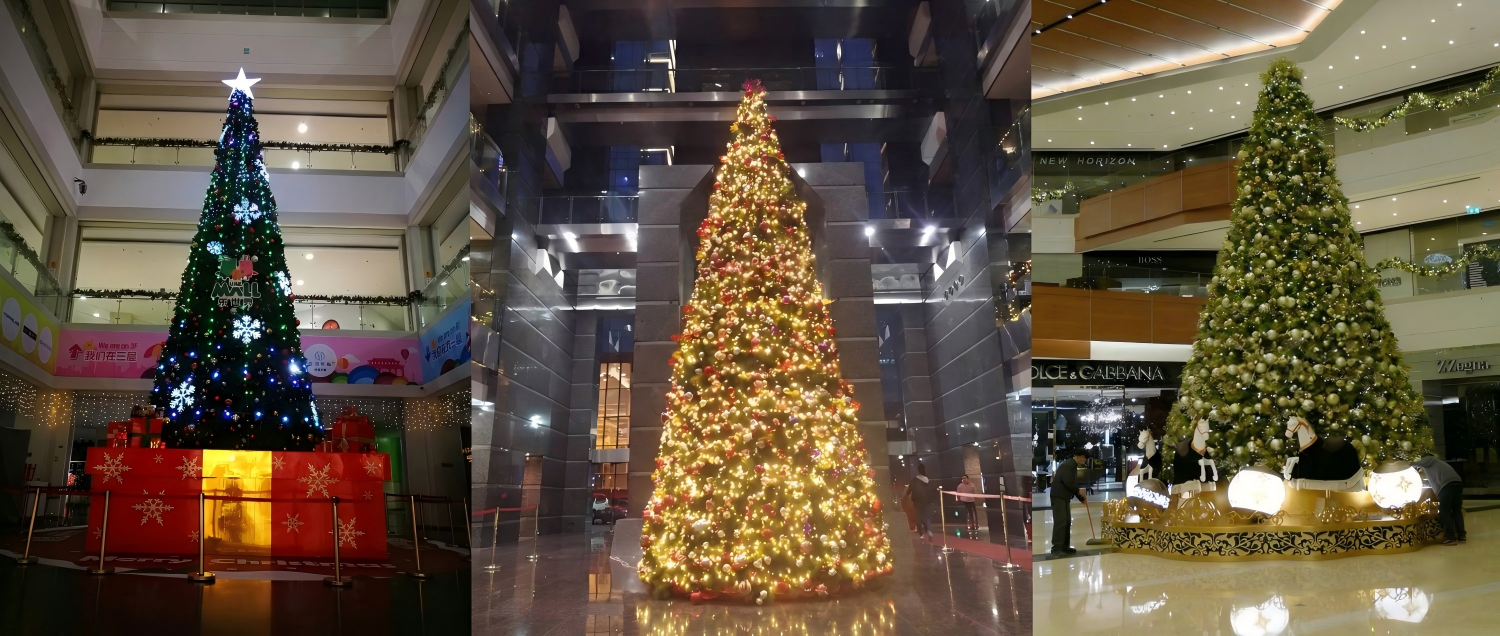
If buyers do not clearly separate indoor and outdoor use from the beginning, later pricing, product selection, and effect expectations can easily become distorted. In many cases, the quotation gap is not caused by inconsistent pricing logic from suppliers. It is caused by the fact that the two sides are not actually talking about the same type of project.
If you are still defining the overall decoration strategy of the project, it also helps to read How to Choose Commercial Holiday Decorations for Malls, Parks, and City Projects, because indoor and outdoor standards should be judged within the broader commercial decoration plan.
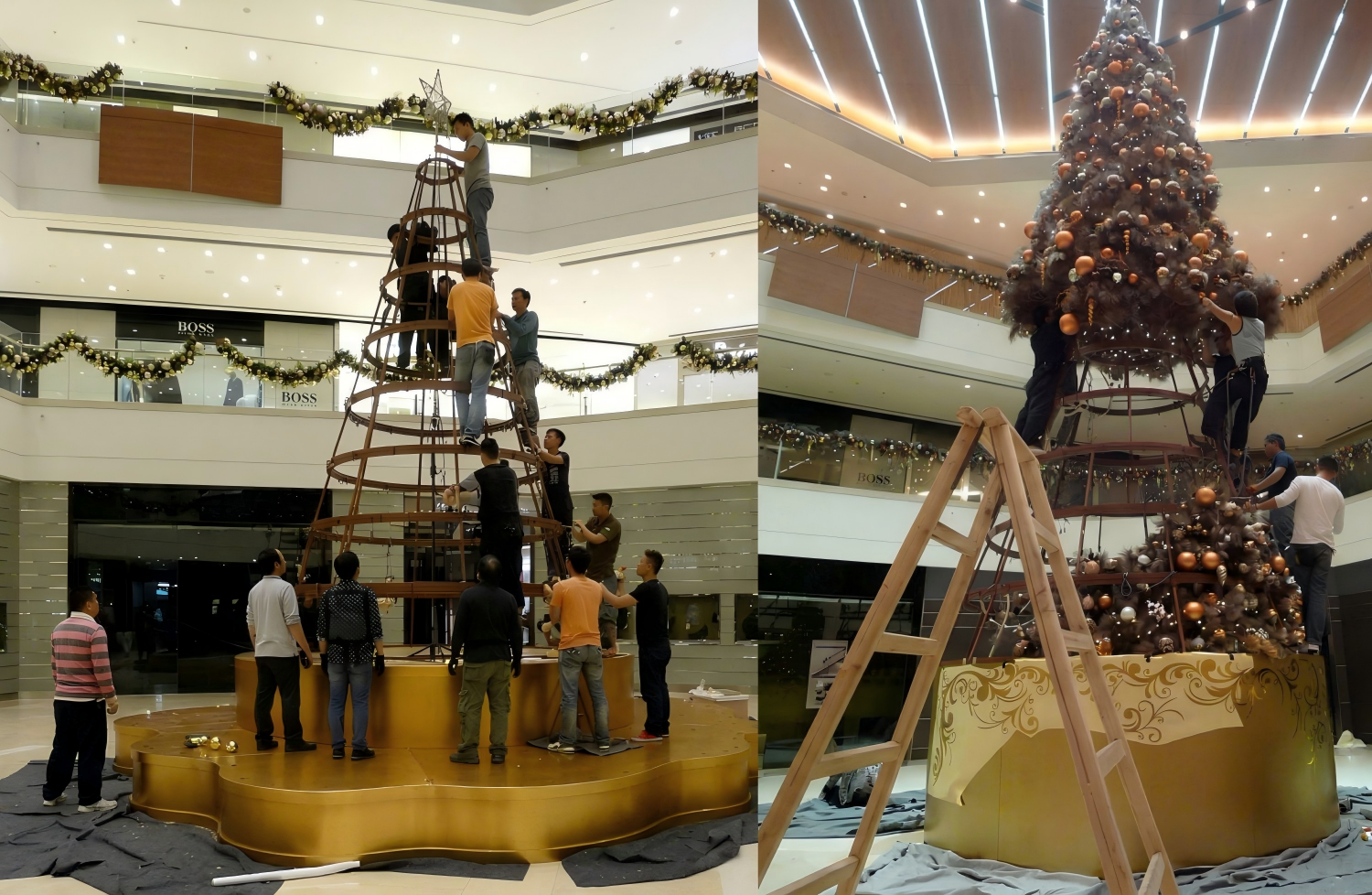
Why Buyers Most Often Misjudge Indoor and Outdoor Christmas Decoration Pricing
In real business communication, inexperienced buyers often begin with a very direct question, such as, “How much is a 6-meter Christmas tree?” or “What is the price for a 10-meter one?” But these questions usually miss the most important condition: Will it be used indoors or outdoors?
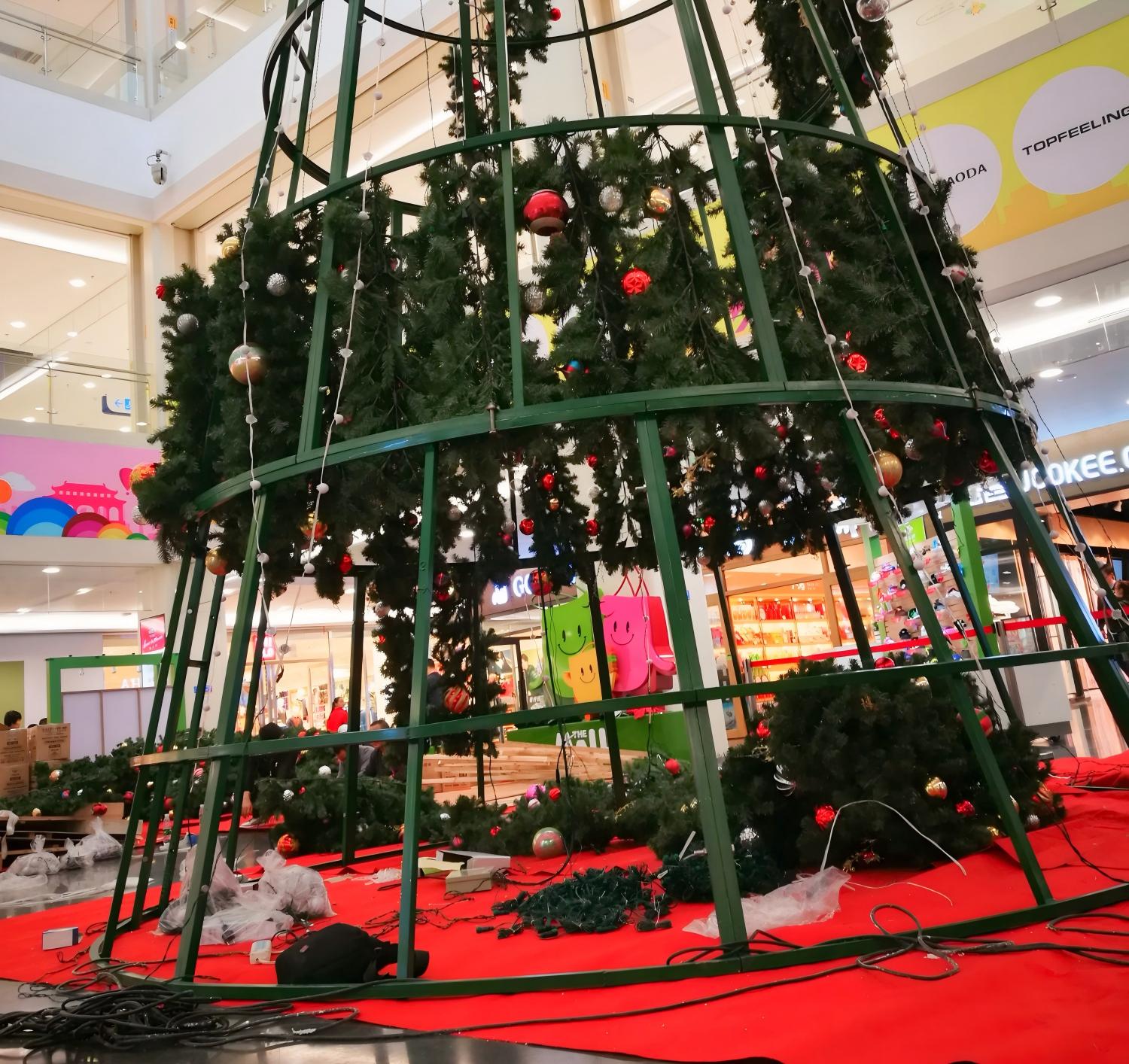
This is one of the most common misunderstandings in commercial Christmas decoration projects. For a supplier, the same tree size can lead to very different materials, frame standards, lighting systems, protection levels, and total cost logic depending on whether it is used indoors or outdoors. In other words, the buyer appears to be asking about size and price, but the factor that really determines the quotation is usually the usage environment.
In actual business follow-up, if the customer does not clearly state whether the project is indoor or outdoor, the safer approach is usually to quote according to outdoor parameters. Outdoor standards are generally higher and closer to the more conservative safety side of the decision. This is especially common with distributor customers, who often do not yet know whether the final end user will use the product indoors or outdoors. In such cases, it is normal to begin with outdoor logic.
However, if the project is later confirmed to be clearly for indoor use, the cost can drop significantly. This is because although indoor and outdoor commercial Christmas decorations may look similar in photos, the actual differences in frame structure, branch material, lighting systems, and surface treatment are often very large.
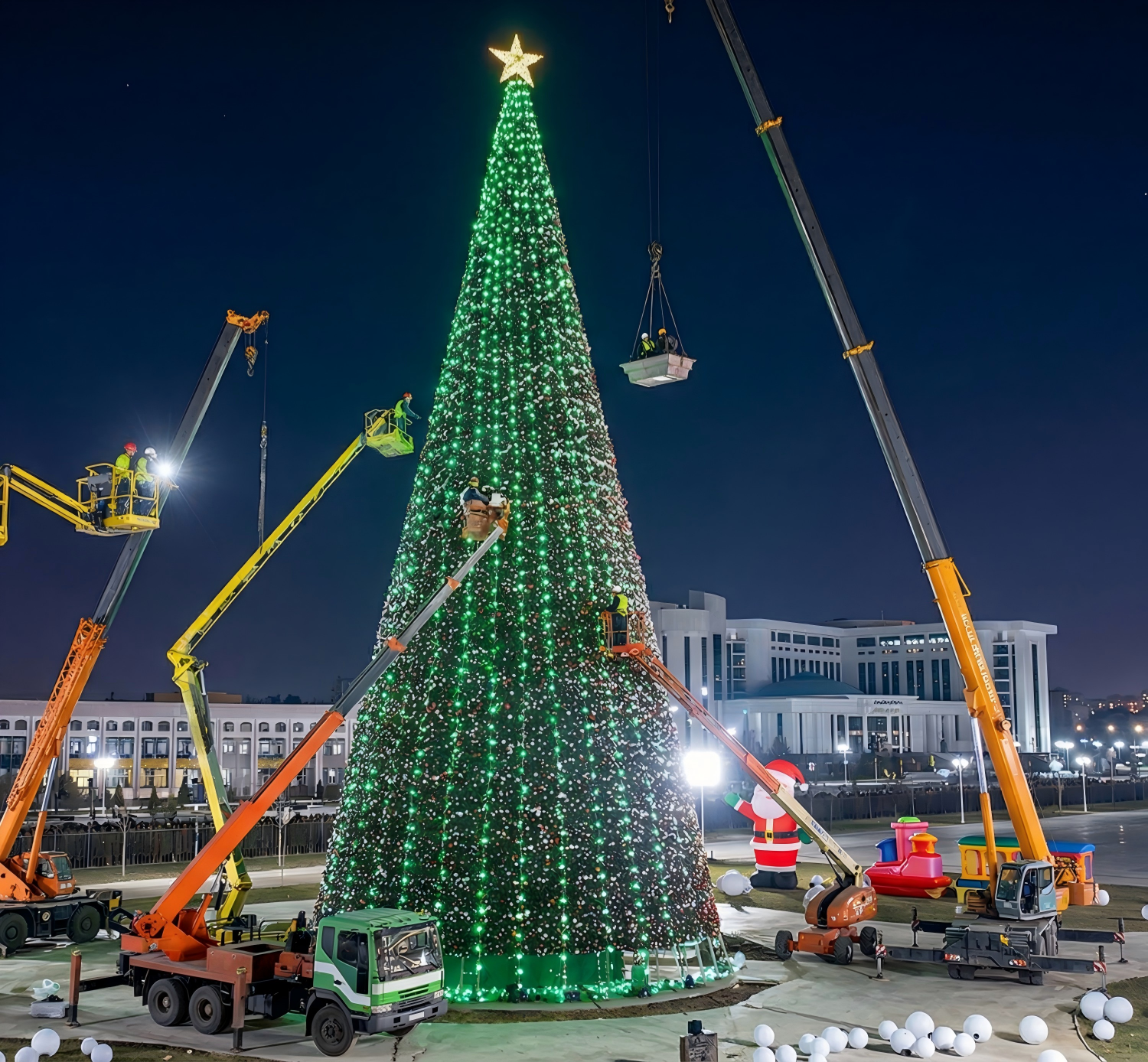
Why Indoor and Outdoor Commercial Christmas Decorations Should Not Be Compared the Same Way
When buyers compare two decoration options, the first thing they usually notice is the appearance: the size seems similar, the lights seem similar, the color looks similar, and both may appear beautiful in photos. But in commercial projects, appearance is only the visible result. What really defines the project difference is the environment.

The same large Christmas tree placed in a shopping mall atrium and in an outdoor plaza does not follow the same standard. The same entrance wreath installed in an indoor hotel lobby and on an exterior building façade does not follow the same logic either. Indoor projects usually exist in relatively stable environments, so they focus more on close-range finish, flame-retardant requirements, detail quality, and coordination with the space. Outdoor projects, by contrast, must face wind, sun, humidity, dust, rain, and public-space safety requirements over time.
That means indoor and outdoor projects may share the same holiday purpose, but they do not share the same material and engineering logic. If buyers look only at appearance and not at environmental conditions, it becomes easy to ask why something that looks similar costs so much more.
Frame Structure Is Often the First Real Cost Difference Between Indoor and Outdoor Projects
When buyers compare indoor and outdoor commercial Christmas decorations, they often see only the visible exterior. But one of the first and biggest cost differences is usually the internal frame.
For indoor projects, the frame usually does not need to face long-term rain exposure or severe outdoor environment changes. That means the surface treatment can often be simpler. Indoor use does not usually require the same heavy anti-corrosion process that is necessary for long-term exterior exposure.
Outdoor projects are completely different. Outdoor frames must face rain, humidity, and temperature change over long periods. If the frame treatment is not strong enough, rust, surface aging, and even structural problems can appear later. For that reason, outdoor frames are usually made thicker, heavier, and stronger. Welding standards are often higher, and the frame usually requires a more complete anti-corrosion process, such as acid cleaning and high-temperature coating, so that it is much less likely to rust during long-term outdoor use. This difference alone can already create a very noticeable price gap.
That is why many customers feel that two trees of the same size should cost nearly the same, while in reality the outdoor version can be much more expensive before the decoration details are even discussed. If you want to understand how size alone is never enough for pricing, you can also read What Affects the Price of a Large Commercial Christmas Tree?.
PVC Branches: Outdoor Projects Must Also Fight Fading and UV Damage
Besides the frame, simulated branches are another area where indoor and outdoor standards often differ clearly. Indoor projects usually focus more on close-view texture, natural color, and refined appearance, while outdoor projects must also consider long-term exposure to sunlight.
If outdoor branch material does not properly account for UV exposure, it can fade quickly, lose depth of color, turn pale, or reduce the overall visual quality after a period of outdoor use. That means outdoor PVC branches usually need higher UV resistance, and this directly increases material cost.
For indoor projects, the key question is often whether the branches look full, natural, and visually refined. For outdoor projects, that is still important, but the branches must also stay visually stable after exposure to sunlight. In other words, outdoor branch material must survive both visual inspection and environmental wear.
Lighting Strings: Waterproofing and Freeze Resistance Are Major Dividing Lines
Lighting is another area where buyers often underestimate the difference. Many people assume that lights are simply lights, but indoor and outdoor lighting requirements are not the same.
For indoor use, waterproofing is usually not the main concern. The lighting decision is more about atmosphere, layering, delicacy, and visual comfort. For outdoor use, however, waterproof performance becomes essential. In most commercial outdoor cases, the lighting system usually needs to reach at least IP65 or higher to be truly suitable for long-term exterior use.
Outdoor projects may also need to consider low-temperature performance. In colder winter regions, freeze resistance matters as well. If the lighting system cannot remain stable in low temperatures, its performance and reliability can be affected.
So from frame to branch material to lighting, indoor and outdoor commercial Christmas decorations are not simply the same products placed in different locations. They often reflect different material and engineering standards from the beginning.
Flame Retardancy Is the One Standard That Usually Cannot Be Removed in Either Case
Although indoor and outdoor decorations differ in many ways, there is one requirement that usually cannot be removed in either case: flame retardancy.
Some buyers assume that flame-retardant performance matters mainly indoors, but in commercial holiday decoration, once the project serves a public or high-traffic space, flame-retardant standards are generally a baseline requirement whether the project is indoors or outdoors. It is not a premium upgrade. It is a minimum expectation.
This means the biggest price difference between indoor and outdoor projects usually comes not from whether they are flame-retardant, but from the additional outdoor demands such as corrosion resistance, UV resistance, waterproofing, freeze performance, stronger structure, and more demanding installation conditions.
Safety Requirements Change Significantly from Indoor to Outdoor Projects
Indoor projects focus more on flame retardancy and close-contact safety
The biggest indoor risk is usually not weather. It is high traffic and close contact. In locations such as mall atriums, hotel lobbies, and commercial building entrances, visitors can come close to the decoration and children may touch it. Because of that, indoor projects usually place more emphasis on flame-retardant performance, safe edges, non-exposed fixing parts, material finish suitable for close inspection, and lighting that is comfortable rather than harsh.
This is especially true in entrances, lobbies, and major circulation zones. Decorative elements should not include sharp or pointed details that can scratch people, and fixing components should be handled carefully to avoid exposed dangerous parts.
Outdoor projects focus more on wind, water, and public-space safety
Outdoor projects follow a different safety logic. Once an exterior decoration lacks structural stability, it becomes not only a visual problem but also a public-space risk. Outdoor projects usually need to confirm wind resistance, waterproof level, electrical safety in wet conditions, whether the display may be touched or impacted in public areas, and whether the lighting system can run stably over time.
In other words, indoor projects are more likely to fail because of close-contact risk or fire-safety problems, while outdoor projects are more likely to fail because of environmental exposure and public safety risk.
Structure and Installation Cannot Follow the Same Logic Either
Indoor installation depends more on spatial wrapping and property coordination
Indoor decorations can often make use of the building itself: doorway wrapping, column treatments, suspended ceiling features, atrium hanging points, and indoor ground scene combinations. Compared with outdoor projects, indoor installation depends more on property coordination, business hours, and protection of the existing finished surfaces.
For example, many malls and hotels allow installation only during short nighttime windows and do not allow damage to floors, walls, or entrance surfaces. This means indoor installation methods often need to be more delicate and more site-specific.
Outdoor installation depends more on fixing methods and structural stability
Outdoor projects place much greater importance on fixing methods, structural support, and wind stability. In plazas, façades, and public landscape areas, it is not enough for the decoration to be installed. It must also remain stable under weather exposure. This makes structural parts, connectors, bases, ballast, and anchoring methods far more important than in indoor projects.
In many places today, expansion bolts or other permanent fixing methods are restricted or not allowed at all. This means outdoor installation logic must be judged early together with the client, property manager, and site condition rather than being solved only after the goods arrive.
If buyers are still in the early specification stage, it is also useful to review Commercial Holiday Decoration Procurement Checklist for Project Owners and Contractors, because indoor and outdoor projects often fail when site restrictions, material standards, and installation limits are not confirmed before ordering.
Lighting Performance Is Also Different: Indoor Atmosphere vs Outdoor Recognition
Indoors, lighting is more about atmosphere and refinement
Indoor spaces usually have more controlled ambient light, so stronger brightness is not always better. In hotels, high-end retail, and mall atriums, the lighting goal is usually softer layering, comfortable color temperature, refined detailing, and coordination with the surrounding environment.
If indoor lighting is too strong or too harsh, it can easily damage the overall atmosphere.
Outdoors, lighting is more about visibility and recognition
Outdoor projects usually need to be recognized from much farther away. In plazas, building façades, open-air entrances, and city-scale commercial spaces, the lighting must not only look attractive but must also be strong enough to be seen and read in the larger environment. That is why outdoor projects care more about adequate brightness, strong night contours, visual recognition in a larger setting, and stable long-term performance.
Indoor lighting that is too bright becomes uncomfortable. Outdoor lighting that is too weak disappears into the environment. This is one of the clearest differences between the two lighting logics.
Why Outdoor Commercial Christmas Decorations Usually Cost More
This is one of the most common purchasing questions. Buyers often ask why the outdoor version costs so much more when the basic size appears similar.
The answer is that outdoor projects must absorb more environmental risk, so their structure, material, and process standards are usually higher.
- The frame is usually thicker, stronger, heavier, and treated with more complete anti-corrosion processes.
- The branches usually require better UV resistance.
- The lighting system usually requires stronger waterproofing and often freeze resistance.
- Outdoor installation is usually more complex and more restrictive.
- Long-term maintenance and weather durability expectations are usually higher.
So when a customer asks “How much is a 6-meter tree?” the more meaningful question is actually: How much is a 6-meter indoor project, and how much is a 6-meter outdoor project? Once that difference is defined clearly, the quotation finally becomes meaningful.
For broader budget logic, you can also read How to Budget a Commercial Christmas Decoration Project for a Mall, Park, or City.
Which Commercial Spaces Usually Follow Indoor Standards, and Which Must Follow Outdoor Standards
Typical indoor scenes
Mall atriums, hotel lobbies, commercial building foyers, indoor streets, indoor open voids, and store entrances inside larger shopping centers usually follow indoor logic. The focus there is on flame retardancy, detail quality, close-view effect, and indoor installation methods.
Typical outdoor scenes
Mall plazas, hotel forecourts, commercial street entrances, building façades, public commercial landscape areas, and city-level commercial nodes usually require outdoor logic. The focus there is on wind resistance, waterproofing, durability, and public-space safety.
Semi-open areas are the easiest to misjudge
Some spaces look “almost indoor,” but should not be judged purely as indoor. Examples include covered entrances, semi-open lobbies, exterior-linked corridors, spaces under exterior canopies, and indoor-outdoor transition zones. These are often the most misjudged areas in commercial projects. In practice, they need to be evaluated according to rain exposure, sunlight, airflow, wind force, and property requirements rather than by appearance alone.
Common Mistakes Buyers Make When Comparing Indoor and Outdoor Decorations
- Looking only at appearance and not at the environment
- Assuming that if both products include lighting, they are equivalent
- Temporarily moving indoor products outdoors
- Underestimating outdoor fixing and wind-load requirements
- Ignoring flame-retardant requirements and property rules
- Overlooking long-term sun exposure, fading, and corrosion
- Failing to confirm whether the project needs multi-season reuse
- Using indoor pricing as the benchmark for outdoor work
What Buyers Should Confirm Before Requesting a Quote
- Is the project indoor, outdoor, or semi-open?
- Is the use period short-term or long-term?
- Will the project stay exposed to sunlight or moisture for extended periods?
- Does the local climate include strong wind, humidity, or temperature extremes?
- Are there fire-safety, property-management, or city-level restrictions?
- Is multi-season reuse required?
- What are the installation conditions and fixing limitations?
- Are night installation windows restricted?
- Is stronger long-distance recognition important?
- Or is closer-range refinement and indoor coordination more important?
Only when these conditions are clear do price comparison, product selection, and effect judgment become reliable.
If your project also includes entrances, facades, or mixed indoor-outdoor transition zones, you can continue reading How to Choose a Commercial Christmas Entrance Decoration Based on Entrance Width, Traffic Flow, and Indoor/Outdoor Conditions.
Final Thoughts
The biggest difference between indoor and outdoor commercial Christmas decorations is not simply whether they can be placed inside or outside. It is that they follow two different systems of materials, safety logic, and project standards.
For buyers, the more mature approach is not to compare based on appearance first. It is to ask what kind of environment the project belongs to, what standard it must meet, and what conditions it must survive. Only after indoor and outdoor logic has been separated clearly does price comparison become meaningful and project execution become more accurate.
Frequently Asked Questions
What is the main difference between indoor and outdoor commercial Christmas decorations?
The main difference is usually found in materials, structure, safety standards, and environmental requirements. Indoor projects focus more on flame retardancy and detail quality, while outdoor projects focus more on weather resistance and public-space safety.
Why do outdoor commercial Christmas decorations usually cost more?
Because outdoor projects usually require higher-grade materials, stronger structures, more protective treatment, and stricter installation standards, so the total cost is usually higher.
Can indoor Christmas decorations be temporarily used outdoors?
In most cases, this is not recommended. Unless the product itself was designed to outdoor standards, it can create safety, durability, and stability problems in exterior conditions.
Should semi-open spaces be judged as indoor or outdoor?
Semi-open spaces should not be judged too simply. They usually need to be evaluated according to rain exposure, sunlight, airflow, wind strength, and property requirements.
Why do suppliers often quote according to outdoor standards when the usage scene is unclear?
Because outdoor standards are usually higher and more conservative. When the buyer or distributor has not yet confirmed the final usage environment, quoting by outdoor logic is often the safer starting point.