





Commercial Christmas Window Displays With Illuminated Decorations
A commercial Christmas window has two jobs: communicate the holiday theme and let customers understand the business behind the glass. An illuminated decoration can be attractive on its own yet work poorly in a window if it hides the merchandise, overwhelms the brand sign or loses its shape against reflections.
Start with the window rather than a product photograph. Check its width, height and usable depth, the merchandise that must remain visible, and the direction from which customers approach. Then choose the form, finish and lighting as one display.
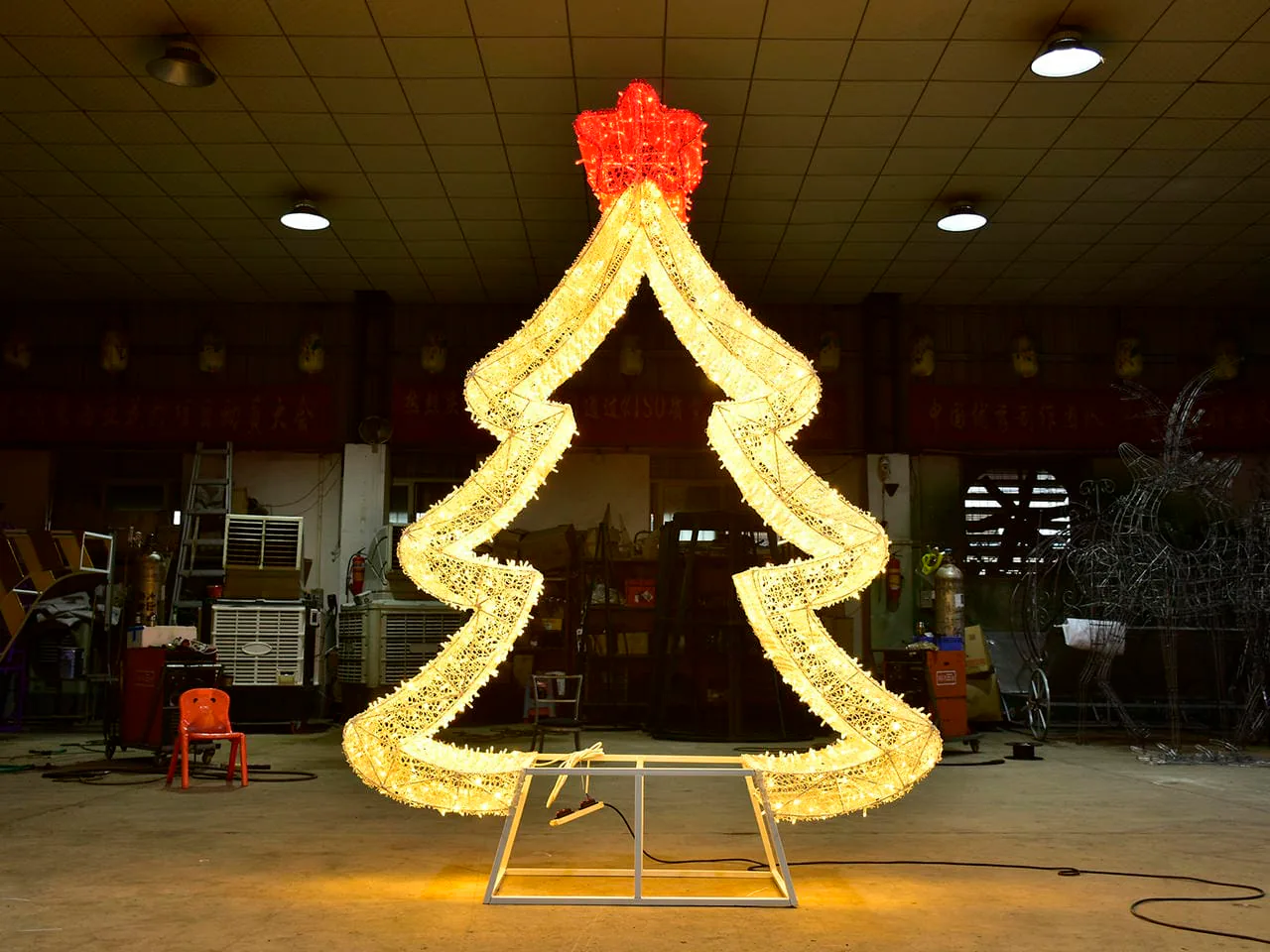
Decide what the window should communicate
For a retail shop, the decoration may frame a featured product or support a seasonal collection. A hotel window may instead communicate a welcoming atmosphere. A flagship storefront may need a recognizable branded composition.
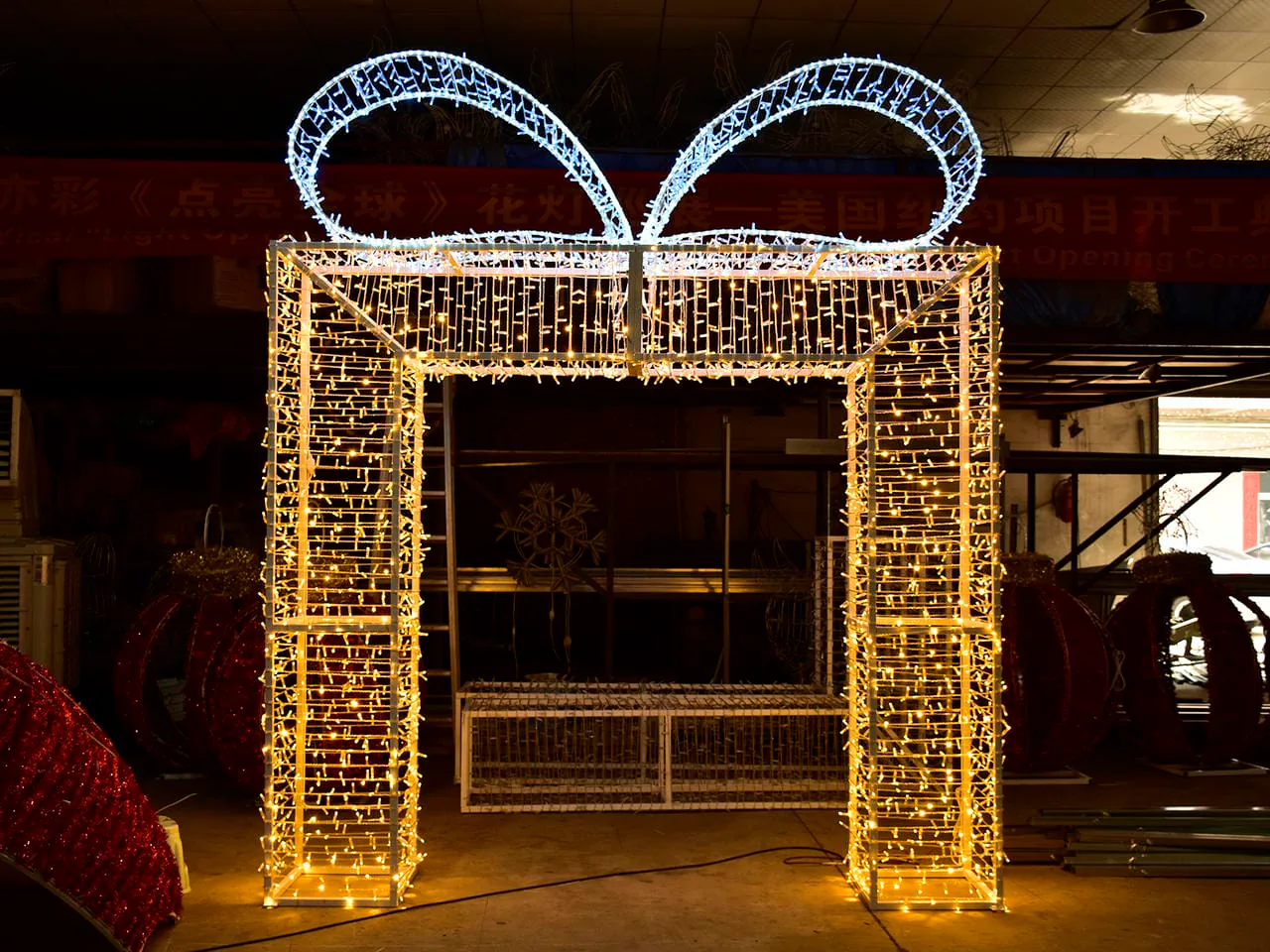
These priorities lead to different arrangements. A small collection of illuminated stars may work as a background, while a dimensional gift display can form part of a scene. Neither should automatically become the main subject. Decide whether the customer should notice the product, the logo or the holiday feature first, and review the layout against that decision.
Match the decoration to the available depth
Width and height alone do not describe a window. Its depth affects how far a decoration can sit from the glass, whether a product can be placed in front, and whether staff can reach the display for adjustments.
A shallow display may be easier to organize around flat or open-outline motifs. A deeper window can accommodate dimensional forms and a foreground, middle ground and background. These are starting points, not rules about what every window must contain.
Use a drawing or simple mock-up with the actual dimensions. Check the visible size of the piece together with its base, supports, cables and the space needed to reach it. A decoration that fits the opening on paper can still leave too little room for the merchandise or maintenance.
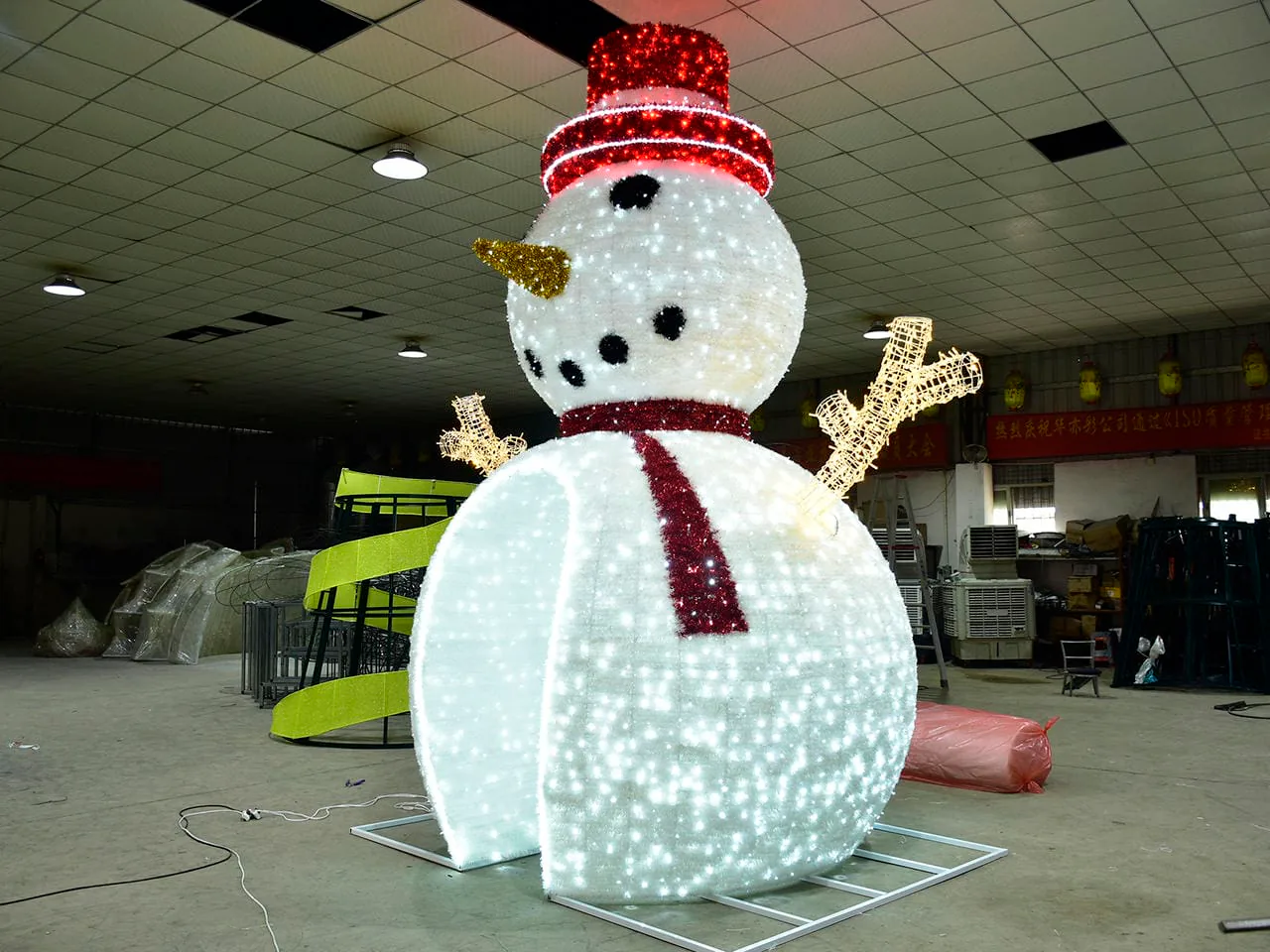
Review the appearance with the lights off
An evening photograph does not show the whole buying decision. During daytime trading, customers may see the frame, decorative covering, colour, rear face and supports more clearly than the illuminated effect.
Request an unlit view as well as an illuminated view of a proposed piece. Compare whether the decoration still reads as a star, snowflake, gift or other intended form when it is not glowing. If it will be viewed from inside the store too, inspect the rear appearance rather than relying only on a front photograph.
For an all-day display, decorative finishes and the lighting should support the same theme. Do not assume that an exposed light frame will look like a fully finished sculpture during the day.
Test the composition through the glass at night
At night, inspect the display from outside with the shop lighting in its normal operating state. Move from a front view to both approaching side views. Check the holiday motif, the featured merchandise and the brand sign together.
If reflected lights make the composition confusing, test a different position, background or lighting arrangement before ordering more fixtures. More light is not automatically a better answer. The aim is a readable composition through the glass, not the brightest individual decoration.
Take ordinary phone photographs as an additional check. A close-up supplied by a manufacturer and a street-view photograph of the whole window answer different questions. Neither a rendering nor a lighting photograph certifies the final installation.
Keep the merchandise and brand visible
Reserve the important sightlines before adding secondary decoration. A gift motif placed at the front of the window can conceal a product behind it. Hanging elements can visually cross a logo even when they do not occupy much floor space.
Keep the palette and number of focal elements consistent with the brand and the surrounding storefronts. A restrained arrangement may be appropriate for one business, while another benefits from a fuller festive scene. Density should follow the setting and the display purpose rather than a universal spacing formula.
Plan for installation and later adjustments
Ask the property team which fixing locations are permitted and whether the display is entirely inside the building or includes exposed exterior elements. Do not assume the glass can carry a decoration, or that a product suitable for one installation method is suitable for another.
Leave access for cleaning, merchandise changes and maintenance. Confirm how modules and cables will be identified and how a technician can reach the relevant connections. Fixing, electrical supply and any required approvals must be resolved for the actual site and selected product; a visual layout is not an installation specification.
What to send for an initial design discussion
Provide a straight-on photograph and photographs from the main approaching directions. Add a view from inside if customers or staff will see the back of the display. Mark the window dimensions, usable depth and positions of merchandise and signage that must stay visible.
Tell the supplier whether the display needs to work during the day, at night or both, and show the existing lighting where possible. Reference images and this basic site information can support an initial visual discussion. Final dimensions, fixing and electrical details still need confirmation before manufacture and installation.
The best starting point is not the largest decoration in a catalogue. It is a clear window brief: who will see it, what they should notice and how the illuminated forms can support the business behind the glass.
Frequently asked questions
Are flat or three dimensional decorations better for a commercial window
Neither is automatically better. Flat and open-outline forms can be easier to arrange in a shallow display. Dimensional decorations need enough depth for the piece, its supports, the merchandise and access. Compare a layout using the actual window dimensions rather than choosing by product height alone.
Should Christmas window decorations be assessed during the day
Yes, if the window is visible during daytime trading. Review the frame, surface finish, rear appearance and the merchandise with the lights off, as well as the illuminated composition at night.
Is a brighter decoration always easier to see through glass
Not necessarily. Check it with the existing shop lights and surrounding reflections. Adjusting the position or background may make the composition clearer without adding more lights.
What information is useful before requesting a design
Send front and approaching-side photographs, window width and height, usable depth, and the positions of merchandise and signage that must remain visible. Explain whether the display is used by day, at night or both. This supports an initial visual discussion, not final fixing or electrical approval.
Discuss your commercial Christmas window display
For a window that belongs to a wider shopping-centre theme, review the shopping mall Christmas decoration guide while keeping the storefront’s own merchandise and brand requirements in view.
Send your site photographs, dimensions and preferred style through the HYCLight contact page to start discussing your commercial Christmas window display.