





String Lights for Hotel Terraces and Outdoor Dining Areas
Hotel terraces and outdoor dining areas can both use string lights to create atmosphere, but they should not automatically receive the same lighting scheme.
One terrace may need a quiet setting where guests can sit and talk. A dining street may aim for a lively evening atmosphere. The same string lights can look quite different against different buildings, plants and levels of activity.
Before asking how many metres to buy or how far apart the bulbs should be, ask a more useful question: what kind of place is this, and how should guests feel here?
Start with the atmosphere of the space
A hotel terrace is often an extension of the building. Guests may use it to talk, relax or enjoy the view. Lighting should support those activities rather than simply compete for attention.
In our practical selection experience, small string lights using familiar F5 LEDs are a starting point for a quiet, relaxed terrace. F5 is a commonly used LED designation in our industry. Small points of light can work with railings, plants and the edges of a space, keeping the decoration part of the overall setting.
Outdoor dining areas may call for a different approach. On a busy commercial street or in a lively dining space, C7 or C9 bulb string lights are another option. Their more prominent bulb outlines can become clearly visible elements of the design.
These are starting points, not fixed pairings. A quiet boutique restaurant does not necessarily need large bulbs, and a hotel terrace used for events need not use only small lights. The use of the space and its intended atmosphere come before the product name.
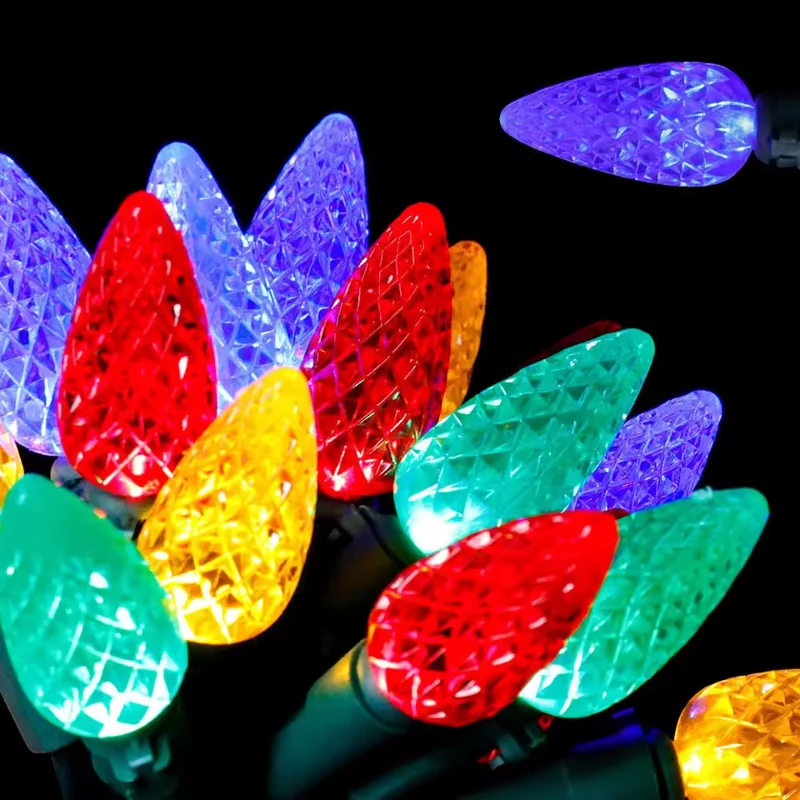
Compare F5 C7 and C9 by scale and actual light output
Keep two questions separate: how large a bulb looks, and how much light it produces.
C9 bulbs generally have a larger external form than C7 bulbs. That does not establish that a particular C9 bulb is brighter or uses more power. Check the selected model’s specifications and compare illuminated samples.
| Option to assess | Potential setting | What to look for in a sample |
|---|---|---|
| F5 LED string lights | A terrace or local feature needing smaller light points and a quieter appearance | Whether the light points suit the plants, railings and architectural details |
| C7 bulb string lights | Dining or commercial spaces where a distinct bulb outline is wanted | The proportion of the bulbs to the space, furniture and decorations |
| C9 bulb string lights | Spaces where a more prominent bulb shape is wanted | Whether the bulbs dominate the scene or feel uncomfortable at close range |
Do not judge only from product photographs on a white background. Place an illuminated sample in the setting and observe it from where guests will sit, stand and approach. This makes problems of proportion easier to spot.
Include existing signs, window displays and landscape lighting in the assessment. A string that looks attractive by itself may not work as well alongside the lights already on site.
There is no universal lighting density
Denser does not always mean better, and sparser does not automatically mean more refined.
On a busy commercial street with many visual elements, widely scattered light points may look disconnected from the surroundings. A dining area aiming for a lively atmosphere can assess a more continuous or denser arrangement that responds to the activity around it.
Near homes or hotel guest rooms, a more restrained approach is usually worth considering. Assess brightness, direction and operating hours as well as density. Reducing the number of strings will not necessarily solve the problem of one bulb shining directly towards a window.
Do not choose density from the label “park” or “commercial project” alone. Within the same site, an activity area can be more noticeable while a quiet seating area retains more darkness and visual space.
Our starting point is the surrounding environment and its users. Decide which areas should stand out, then work out how the strings should be distributed. Avoid imposing one fixed spacing on every location.
Treat entrances windows trees and lawns differently
When customers send site photographs, we look beyond floor area. Building forms, plant outlines, main viewing directions and existing lighting all matter.
Entrances: Check whether the entrance remains easy to recognise and whether the strings work with the frontage, signs and circulation space. A photo-friendly decoration must still accommodate normal access.
Windows and window ledges: Consider the view from both sides. Strings may form part of a window display, but reflections and interior lighting can change their effect. Inspect the arrangement from indoors and outdoors.
Trees: Look at the canopy and branch structure. Hanging lights only in a low band beneath the tree can leave the lighting disconnected from its crown and create awkward proportions. Decide which part of the tree the design is intended to express before choosing a route.
Lawns and low planting: These are viewed differently from overhead strings. Consider the main viewpoint, walking routes and maintenance activity rather than copying a terrace’s overhead arrangement.
Where the main task is covering hedges or shrubs, compare the fit of net lights and string lights separately. Not all plant decoration calls for the same layout.
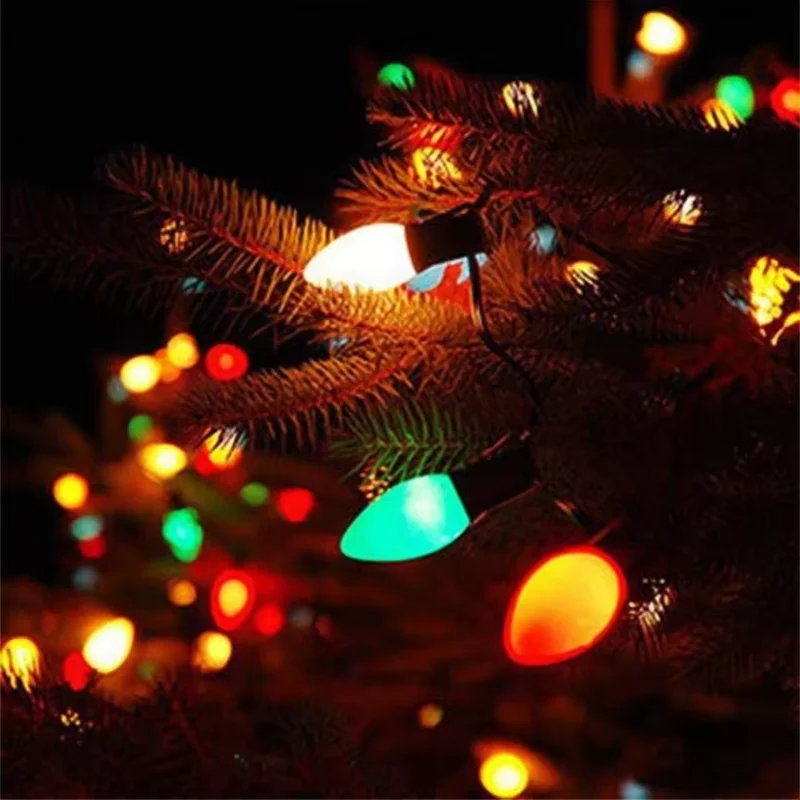
Approve a representative section before extending the design
Before decorating the whole area, choose a representative section: part of the terrace boundary, a decoration near a group of dining tables or a tree beside the entrance.
Do not assess it only by standing at the installation position and looking upwards. Walk the guests’ approach route and sit in the actual seats. Check whether bulbs draw too much attention, whether any area feels crowded, and whether the lighting connects naturally with the surroundings.
Inspect the daytime appearance too. Cables, bulbs and fixing arrangements remain visible during the day; hotel and dining spaces need to work beyond their evening photographs.
Once the result is agreed, keep site photographs and the product reference before extending the design to other areas. These give suppliers and installers a clearer brief than simply asking for the lights to be denser or brighter.
Confirm installation conditions separately from appearance
After agreeing the visual direction, check whether the specific products suit the intended use.
Confirm whether bulbs can be replaced individually, whether cables and connectors match, how the product may be connected, and which installation accessories are required. Follow the documentation for the selected model; similar appearances do not establish compatibility.
Strings crossing open spaces also need appropriate support and fixing arrangements. Photographs help with the visual discussion, but they do not replace site confirmation of supports, circulation clearances and electrical conditions. This guide does not provide universal spans, load capacities or wiring methods.
String lights primarily provide decoration and atmosphere. Do not assume that they replace the functional lighting the venue needs.
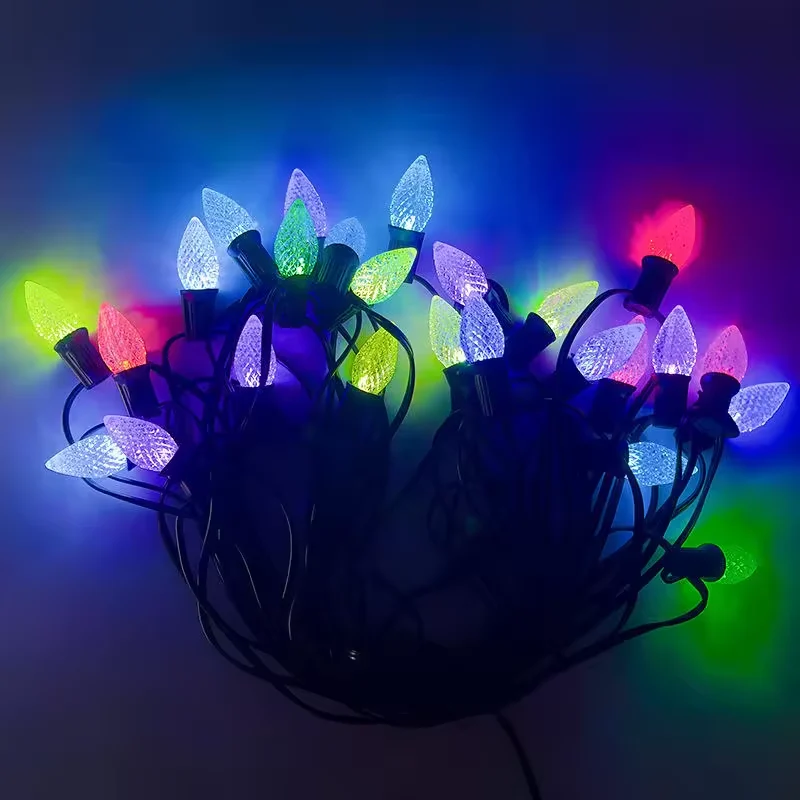
Start the design conversation with site photographs
You do not need a complicated documentation package for the first discussion. Send several current photographs from different angles and identify the areas you want to decorate:
- Is it a hotel terrace, an outdoor dining area or a commercial street?
- Are you decorating entrances, windows, trees, lawns or several different areas?
- Should the overall atmosphere feel quiet and relaxed or lively and noticeable?
- Are guest rooms, homes or other sensitive neighbouring spaces nearby?
Photographs help us assess how string lights could relate to the setting. Once the initial direction is clearer, provide the relevant dimensions and installation conditions so that selection and quotation can progress.
Send your site photographs to HYCLight. We can start with the environment and intended atmosphere, discuss F5 LED strings or C7 and C9 bulb strings, and then work towards a specific proposal.
Perguntas frequentes
Must hotel terraces use F5 LED string lights
No. F5 LED strings are an option for a quieter appearance with smaller light points. The choice should still reflect the hotel’s style, terrace activities and existing lighting.
Is a C9 bulb brighter because it is larger than C7
Not necessarily. External size and actual light output are different characteristics. Check the specific models and compare illuminated samples.
Should outdoor dining string lights be as dense as possible
No. Density should fit the venue, its users and surrounding lighting. A lively commercial space can assess a denser layout, but it still needs to be checked from the places customers will actually use.
Can we start with photographs only
Yes. Photographs are useful for discussing an initial visual direction. Dimensions, product quantities and installation conditions can be added as the proposal becomes clearer.