




Factory-Direct vs. Local Christmas Decorators: A Buyer’s Guide for Commercial Projects
When a property, city, mall, theme park, or event team starts a commercial Christmas project, the first decision is not which design looks best. It is which supply route should carry the project. The two options most often compared are a local professional holiday decorator (also described as a Christmas lighting contractor or a commercial Christmas decorating company) and a factory-direct manufacturer that designs and builds the displays itself. A third group, made up of distributors, importers, and trading companies, frequently sits between the two.
Searching for terms such as professional holiday decorators or commercial Christmas decorating companies usually returns local service businesses, city directories, and quote platforms rather than manufacturers. That is correct for a buyer who wants a local team to handle everything on site. It is less helpful for a buyer who wants to understand the full supply chain, compare landed cost, or source custom-built displays at scale. This guide explains the roles, compares them on the same dimensions, and gives a buyer-owned decision framework without declaring a universal winner.
HOYECHI is a factory-direct manufacturer. We have written this guide to stay balanced: a local decorator is not an overpriced middleman, and a factory is not automatically the cheaper option. The right answer depends on project scope, installation capacity, timing, location, risk allocation, and the total cost of getting the display installed and operating. The guide does not approve a provider, contract, or commercial outcome, and it does not replace local structural, electrical, insurance, or permit review.
Start with the three supply roles, not a single label
Buyers often use the word “vendor” for every company in the conversation, but the roles carry different responsibilities and different risks. Naming the role first prevents a buyer from comparing a full-service local proposal with a product-only factory quotation as if they were the same thing.
Local professional holiday decorators and contractors
A local professional holiday decorator or Christmas lighting contractor sells a service that usually combines design, product sourcing, installation, maintenance, take-down, and storage. The company may build nothing itself; it assembles products from several suppliers into a local installation. Its value is local accountability: a named business that visits the site, holds local insurance, manages the crew, and responds during the season. Some operators are small residential installers, while larger commercial Christmas decorating companies handle malls, municipalities, and multi-property portfolios.
Factory-direct manufacturers
A factory-direct manufacturer designs, fabricates, wires, tests, and ships the displays under its own roof and sells them directly to the buyer without a reseller in between. Direct factories typically offer engineering control, custom dimensions and finishes, batch consistency, and replacement parts from the same production line. The quotation is usually product-and-freight focused, and local installation is often a separate responsibility unless the factory offers optional on-site supervision or has a local partner.
Distributors, importers, and trading companies
Between the two sit resellers. An importer handles customs and holds regional stock; a distributor supplies catalog products and small replenishment quantities; a trading company sources from multiple factories and may present itself as a manufacturer. None of these is inherently unreliable, but each adds a margin and a communication hand-off. The key task for a buyer is to identify which role is actually answering the email, because a trading company that cannot control the workshop cannot always control lead time, quality, or custom changes.
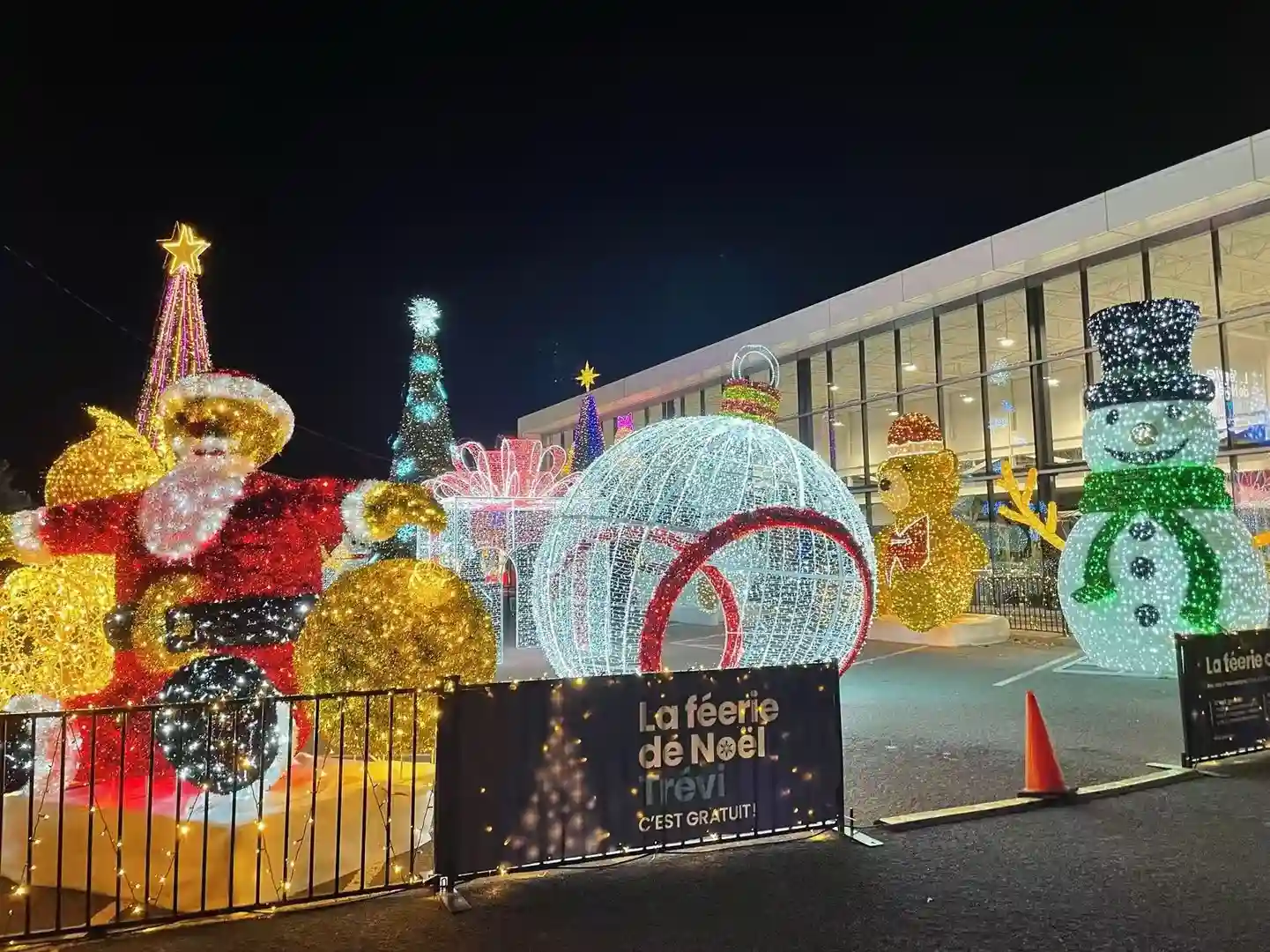
Factory-direct vs. local decorators: a side-by-side comparison
The table below compares the two routes on the same dimensions. Treat the cells as tendencies to verify on each proposal, not fixed guarantees. A well-run local firm can be highly capable, and a factory can offer more support than a product-only quote suggests.
| Dimension | Factory-direct manufacturer | Local professional decorator / contractor |
|---|---|---|
| What is sold | Custom-built products, engineering, testing, packaging, and shipping | A bundled service: design, sourcing, installation, take-down, and often storage |
| Cost structure | Ex-works or FOB price plus freight, duties, and any local installation | One turnkey price that includes labour, service, insurance, and supplier margins |
| Individualisierung | Deep control over size, frame, colour temperature, voltage, and finish | Strong local design styling; custom hardware depends on its suppliers |
| Installation responsibility | Usually the buyer’s crew or a hired installer; remote guidance available | Installed and removed by the contractor’s own insured team |
| Local service and response | Cross-time-zone support; fastest when parts and contacts are pre-arranged | Same-language, same-region response and on-site visits |
| Best-fit scale | Large, multi-site, multi-category, and repeatable projects | Single-site and service-heavy installations where local labour matters |
| Order and timing | Production and ocean-freight lead time; planning must start early | Local scheduling; quicker for in-stock and near-term work |
| Warranty and parts | Factory-backed warranty and same-line spare parts | Local warranty handling and service calls; manufacturing is upstream |
Cost structure: why the two quotes are hard to compare directly
The most common mistake is comparing a contractor’s turnkey number with a factory’s unit price and treating the difference as pure savings. They are not the same bundle. A local decorator’s price typically includes the products, design time, crew labour, lifts and tools, insurance, vehicle and fuel, take-down, off-season storage, and the company’s service margin. A factory quotation typically covers the manufactured goods and export packing, with freight, import duties, customs clearance, and local installation added separately.
For a fair comparison, build the landed and installed cost for the factory route: ex-works price, export and ocean freight, insurance in transit, duties and brokerage, inland transport to the site, and the cost of a local installation crew or your own labour. Add the cost of someone managing the process. Only then does the factory number become comparable to the turnkey contractor number. Resellers in the chain each add a margin, commonly expressed as a percentage of the resale price; the actual percentage varies widely by product, volume, region, and contract, so ask for line-item pricing rather than relying on a generic figure.
Factory-direct can be lower on a landed-and-installed basis for large custom projects, especially when the buyer already has an installation crew. It can work out equal or even higher for a small single-site job once freight, duties, minimum-order effects, and local labour are included. There is no universal answer, which is why the buyer should request the same scope in every quote.
Design, customization, and engineering control
This is where the difference in roles is most visible. A factory-direct manufacturer controls the workshop, so it can change structural dimensions, steel gauge, wire colour, LED colour temperature, voltage and connectors, weatherproofing, and custom light patterns, and it can coordinate several product categories to one visual standard. That control matters for branded displays, engineering-grade outdoor sculpture, and large orders where every piece must match.
A local professional decorator is often strongest at design integration and local styling: translating a property’s brand into a themed scheme, layering products, and managing how the display reads from the street. When the project needs a genuinely custom-built piece rather than a catalog combination, the contractor’s ability depends on its upstream suppliers. Ask whether the decorator manufactures, holds stock, or forwards custom requests to a factory, because the last route adds a layer and a delay.
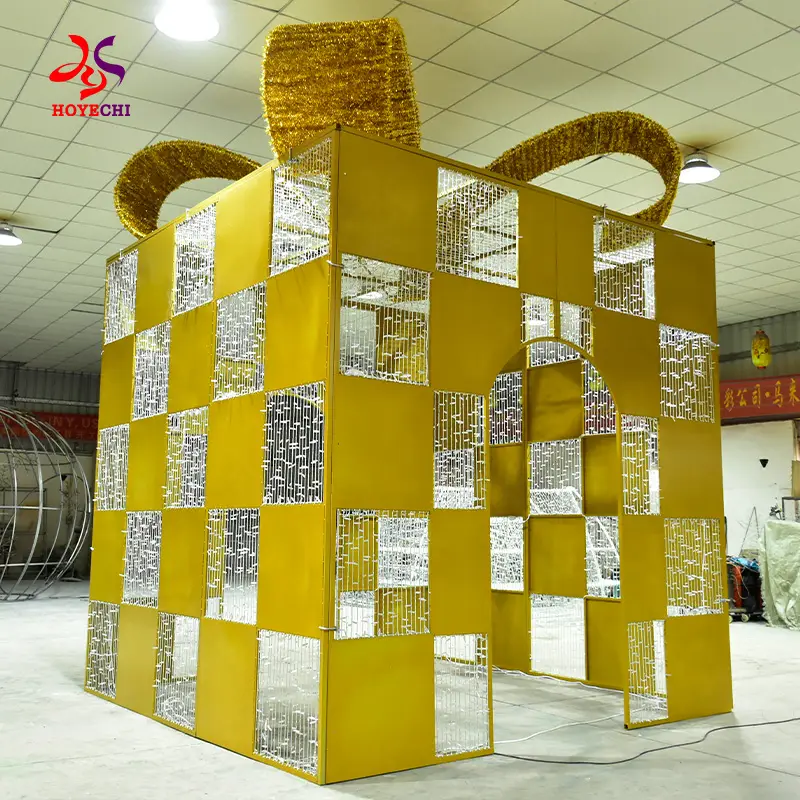
Installation, removal, storage, and local responsibility
This dimension is the core strength of a local contractor and should be weighed honestly. A commercial Christmas decorating company supplies the crew, schedules the lifts, holds the insurance and any required licences, manages safety on site, and returns for take-down and storage. The buyer has one local entity responsible if a display fails, a permit is questioned, or a worker is injured. For teams with no installation capacity, that single point of responsibility is valuable and often worth the service margin.
Most factory-direct sales do not include local installation. The buyer either uses an in-house facilities team, hires a local installer or electrical contractor, or contracts the factory for limited on-site supervision. The factory can provide assembly drawings, remote guidance, and pre-tested modular pieces, but local liability, workers’ insurance, and site safety remain on the buyer and the local installer. If no one on your side can safely install large outdoor structures, a turnkey local route or a hybrid arrangement is the safer choice.
Project scale, volume, and multi-site consistency
Factory-direct economics improve as scale and repeatability rise. City-wide festivals, large light parks, mall chains, multi-property portfolios, and projects that combine trees, motif lights, arches, and pole displays benefit from one production standard, coordinated shipping, and consistent batches across many units. A direct factory can also plan spare parts before shipment so replacements match the originals.
Local decorators are typically the better fit for a single site or a small group of nearby properties where dense local service matters more than production volume. A large national rollout can still be run through a contractor, but the buyer should confirm how the company sources consistent products across regions and whether it relies on the same upstream factory, or on several inconsistent suppliers.
Communication, lead times, and shipping
Buying direct adds logistics the buyer must manage. Communication crosses time zones, production takes a defined schedule, and ocean freight plus customs means the order should be placed months ahead, not weeks. Importers and distributors exist partly to remove that friction by holding local stock, which is why a local or stocked route can be faster for late or small projects.
A local contractor speaks the same language and business hours, can visit the site quickly, and absorbs the supplier coordination. A factory route is fastest and smoothest when the buyer names one project contact, locks the specification early, and agrees on milestones and shipping terms in writing. If the team cannot plan far in advance, the lead-time difference may outweigh any product-cost advantage.
Warranty, spare parts, and after-season support
A factory backs the products it built and can supply matching spare parts from the same line, but cross-border warranty handling takes coordination and may not be immediate. A local decorator offers fast service calls and often stores and maintains the display between seasons, but the underlying manufacturing is upstream, so deep component fixes may still go back through the supply chain.
For either route, ask in writing what the warranty covers, for how long, who pays freight on warranty parts, what spares are included before shipment, and what response time applies during the season. A low price with no defined spare-parts plan can become expensive in the first year of operation.
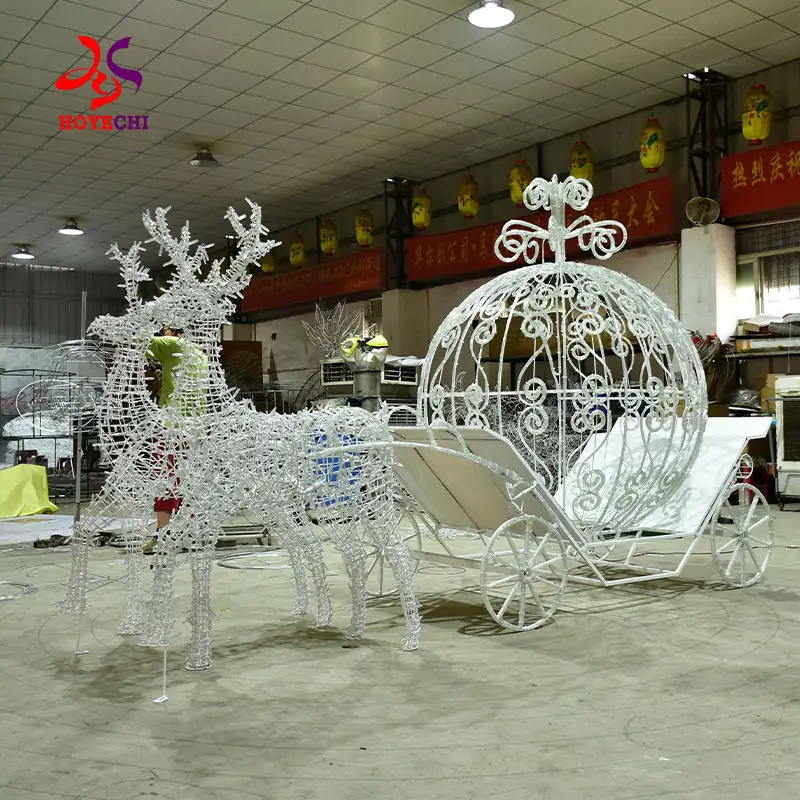
When to choose a local professional decorator
A local route is usually the stronger choice when most of the following apply. Use this as a checklist against your own project rather than a rule.
- The project is a single site or a small set of nearby properties.
- You want design, installation, maintenance, take-down, and storage bundled with one accountable company.
- No in-house team can safely install large or elevated displays.
- You need local insurance, permits, and a named entity responsible for site safety.
- The timeline is short and locally stocked products are acceptable.
- The displays are mostly catalog combinations rather than custom-engineered structures.
- Fast same-region response during the season matters more than the lowest unit price.
When to buy factory-direct
A direct factory route is usually the stronger choice when the following conditions describe the project. Again, verify each item against the proposals.
- The project is large, multi-site, repeated across seasons, or combines several product categories.
- You need custom dimensions, engineering, branded finishes, or tight batch consistency.
- You have an in-house installation crew or an established local installer and electrical contractor.
- You can plan months ahead and manage production, freight, and customs milestones.
- Volume is high enough that removing resale margins and ordering matching spare parts changes the budget.
- You want direct communication with the team that actually builds the displays.
- You are prepared to own local liability, insurance, and site safety through your own contractor.
The hybrid option: factory products plus a local installer
Buyers do not have to choose an extreme. A common middle path is to buy custom-built displays factory-direct and hire a local contractor or electrical firm purely for installation, take-down, and service. This separates product cost from local labour, keeps a named insured entity on site, and still captures production control. It requires clear contracts: the factory must supply installation documentation and pre-tested modules, while the local installer must accept responsibility for mounting and site safety rather than warranting products it did not build.
The hybrid works best when the buyer can coordinate two contracts and define the boundary between them. If a single accountable turnkey relationship is more important than splitting the cost, a full local contractor remains simpler. You can review the broader choice of owning versus renting displays in our rent vs. buy comparison.
How to verify either provider before signing
Verification is what turns a confident sales conversation into evidence. The checks differ by role, but every provider should be able to answer them without delay.
Verifying a factory-direct supplier
- Request a live video walkthrough of the workshop, including welding, wiring, and testing areas, on a recent call rather than a pre-recorded clip.
- Check the business licence and confirm the scope lists manufacturing rather than only trading or consulting.
- Ask a technical question specific to your project, such as steel gauge or weatherproofing for an outdoor structure, and judge whether the answer is immediate and specific.
- Ask for completed project evidence and how long displays have run in real outdoor conditions.
- Confirm the testing process, such as continuous burn-in before packing, and ask how spare parts are planned.
- Clarify intellectual property: who owns custom designs and whether they are shared with other buyers.
Verifying a local decorator or contractor
- Confirm business registration, local trade licence, and the address of the operating entity.
- Ask for proof of general liability and workers’ insurance, and verify coverage for elevated and electrical work.
- Request local references and photographs of completed projects at similar scale.
- Ask whether the firm manufactures, holds stock, or sources from a factory, and identify the upstream supplier for custom pieces.
- Define in the contract who handles permits, installation, take-down, storage, warranty, and season-long response times.
- Confirm the products meet applicable safety standards for the installation environment.
For a structured way to collect these records, use our Beschaffungs-Checkliste für gewerbliche Festdekorationen, and align the budget with the project budgeting guide. Our Gewerbliche Weihnachtsdekorationslösungen page shows the full range of built displays, with product lines for commercial Christmas lights, large Christmas trees, ornaments and wreaths, Christmas decorations, und pole-light trees.
Häufig gestellte Fragen
Is factory-direct always cheaper than hiring a local decorator?
No. Factory-direct can lower the product cost for large custom projects, but the comparable figure is the landed and installed cost, including freight, duties, local installation labour, and the time spent managing the project. For small or single-site jobs with no installation crew, a local turnkey quote can be equal or lower once every cost is included.
Do factory-direct manufacturers install the decorations themselves?
Usually not as part of a standard product order. Most factories ship tested, modular displays and provide assembly guidance, while a local crew or electrical contractor handles installation. Some factories offer optional on-site supervision or work with local partners, so ask what is included and who carries site liability.
Are professional holiday decorators the same thing as Christmas lighting contractors?
The terms overlap heavily. Both usually provide local design and installation services, and many commercial Christmas decorating companies also describe themselves as contractors. The useful distinction is not the title but whether they manufacture, hold stock, or source products from a factory, and whether they carry their own installation insurance.
Can I buy displays factory-direct and still hire a local installer?
Yes. This hybrid approach is common: the factory supplies custom-built, tested products and documentation, and a local insured firm handles mounting, take-down, and service. It needs clear contracts that separate product warranty from installation responsibility so neither party is liable for work the other controls.
How do I confirm a supplier is a real factory rather than a trading company?
Request a live video workshop tour, compare the business licence scope, ask specific engineering questions, and review project and testing evidence. A manufacturer can usually answer technical questions immediately and show production under one roof, while a trading company sources externally and may add delays and communication hand-offs.
Is there a minimum order for factory-direct commercial projects?
Minimums vary by factory and product type, and custom-built pieces generally have a higher threshold than catalog stock. Rather than assume a number, tell the supplier the site, quantities, and whether the project repeats, and ask for written minimums, lead times, and the spare-parts arrangement in the same quotation.
Next step: map the route to your own project
There is no universal winner between a factory-direct manufacturer and a local professional decorator. The decision belongs to the project: its scale, custom-engineering needs, installation capacity, timing, and the total landed and installed cost. Define the roles, request the same scope in every quote, run the verification checks, and keep local insurance and safety review in place.
If your project is large, custom, multi-site, or repeated across seasons, contact HOYECHI with your site brief and we will help you evaluate a factory-direct or hybrid route, including lead times, testing, spare parts, and shipping. If you need a fully bundled local service, the checklists above will help you select and verify the right commercial Christmas decorating company in your region.