







واجهات عرض تجارية بمناسبة عيد الميلاد مع زينة مضيئة
A commercial Christmas window has two jobs: communicate the holiday theme and let customers understand the business behind the glass. An illuminated decoration can be attractive on its own yet work poorly in a window if it hides the merchandise, overwhelms the brand sign or loses its shape against reflections. Because a storefront window is viewed through glass from a moving street, the rules that govern a good display are partly optical, not just decorative.
Start with the window rather than a product photograph. Check its width, height and usable depth, the merchandise that must remain visible, and the direction from which customers approach. Then choose the form, finish and lighting as one display. This guide explains the optics of glass, how to size and position pieces, and how to specify an illuminated window that stays readable by day and night.
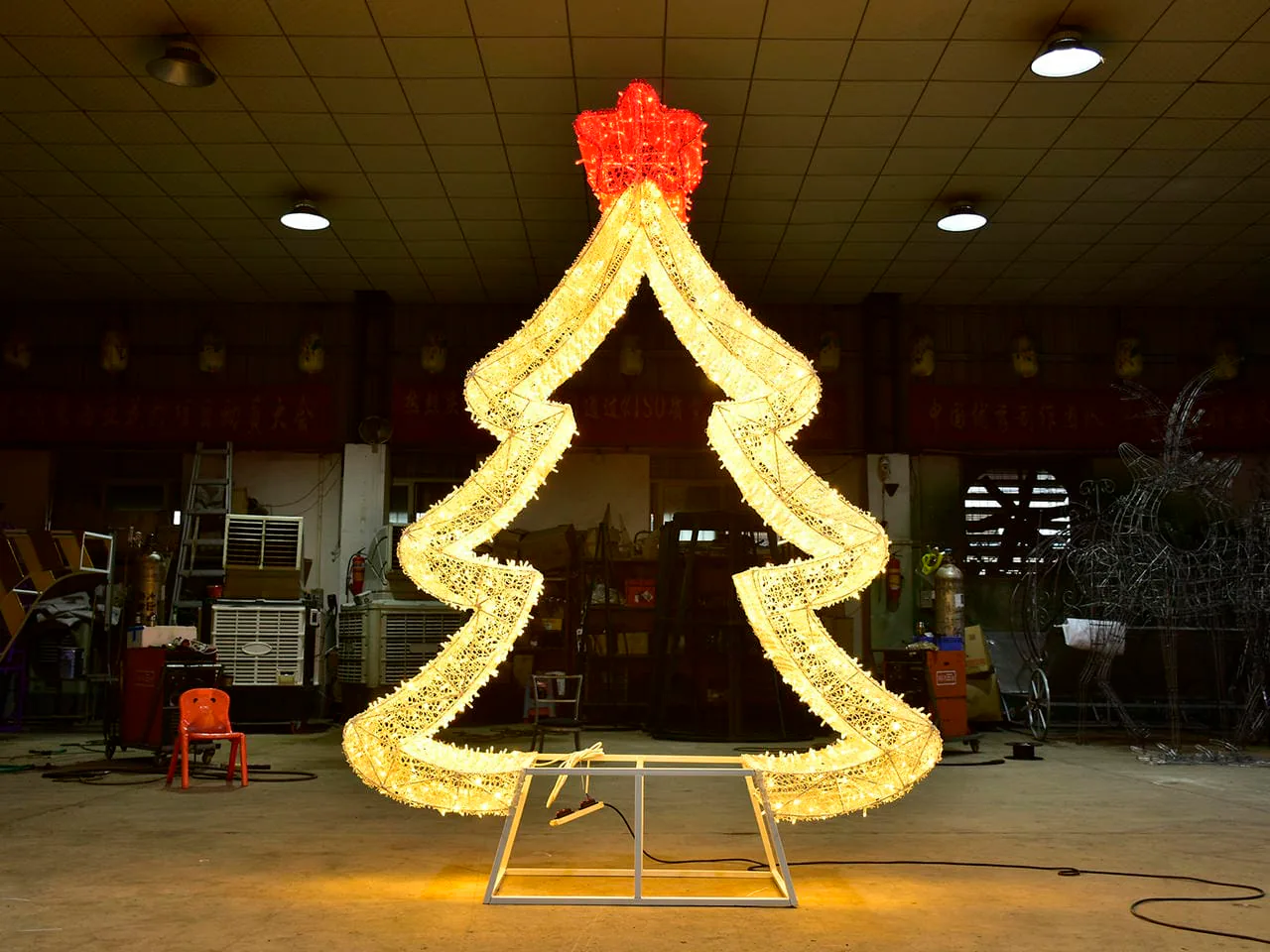
Why glass changes everything: reflection and contrast
A shop window is a partial mirror. During the day, bright outdoor light reflects off the glass while the interior is often darker, so a shopper sees the street and sky reflected rather than the display. At night the balance reverses and the interior becomes visible, but interior spotlights and passing headlights can still create glare. The deciding factor is contrast: a decoration is visible when it is noticeably brighter or darker than what surrounds it, not when it is simply bright in absolute terms.
This explains why adding more lamps can make a window harder to read. If every element is raised to the same high brightness, the motif, the merchandise and the reflections merge into one bright field and the focal point disappears. A readable display uses a controlled brightness hierarchy: the hero element brightest, supporting pieces lower, and the background darkest. Before ordering, test the proposed piece against the actual shop lighting at the busiest viewing time rather than judging it from a dark studio photograph.
Three practical measures reduce reflection problems: position the main motif away from the strongest reflected area (often the upper centre of the glass), use a dark or matte backdrop behind the display to absorb reflections, and angle glossy surfaces so they do not reflect the street directly. Anti-reflective glass and internal blinds, where fitted, further shift the balance in favour of the display.
حدد ما الذي يجب أن تعبر عنه النافذة
For a retail shop, the decoration may frame a featured product or support a seasonal collection. A hotel window may communicate a welcoming atmosphere. A flagship storefront may need a recognizable branded composition. Decide first whether the customer should notice the product, the logo or the holiday feature, and review every later decision against that single priority.
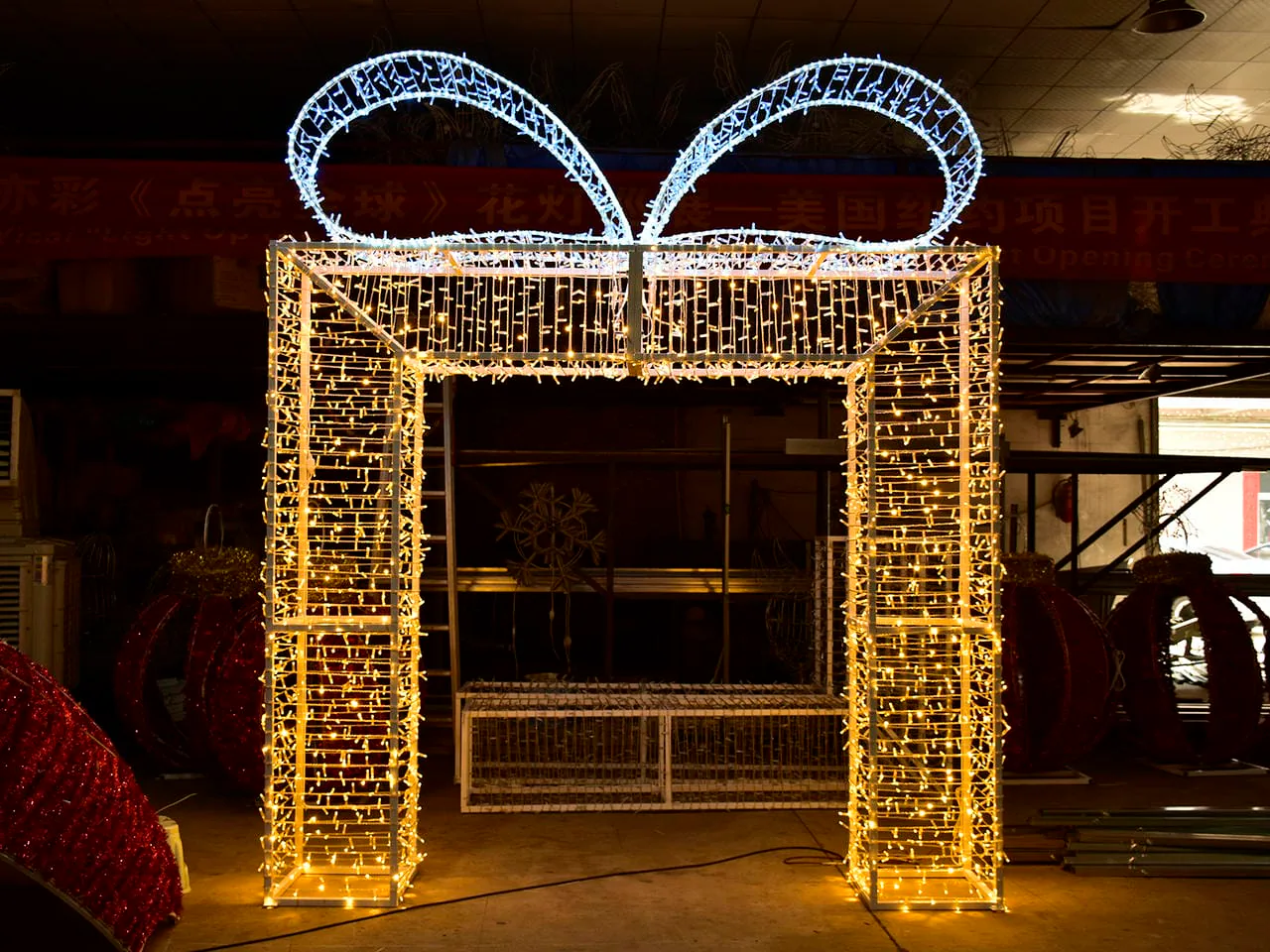
These priorities lead to different arrangements. A small collection of illuminated stars can work as a background, while a dimensional gift display can form part of a scene; neither should automatically become the main subject. A useful discipline is to define one hero element, a small number of supporting pieces and a clear negative space, then resist adding further items that compete for the same sightline.
Colour temperature and brand consistency
The colour of white light is measured in kelvin (K). Warm white, roughly 2700K to 3000K, reads as golden and traditional and suits hospitality, jewellery and classic festive themes. Neutral to cool white, around 4000K to 6500K, reads as crisp and modern and suits technology, fashion and minimalist brand identities. Mixing several white temperatures in one window usually looks unintentional, so specify one temperature across the display unless colour contrast is a deliberate design feature.
Coloured (RGB or fixed-colour) motifs draw the eye strongly and should be reserved for the hero or for a coordinated palette. Keep the total number of colours consistent with the brand: a luxury storefront often uses two or three colours plus one white, while a family-oriented retail display can carry a fuller palette. The colour choice should also hold up in daytime, when the lamp colour is less visible and the painted finish carries the theme.
اجعل الزخرفة متناسبة مع العمق المتاح
Width and height alone do not describe a window. Its depth affects how far a piece can sit from the glass, whether a product can be placed in front, and whether staff can reach the display for adjustments. A shallow window is usually better organized around flat or open-outline motifs; a deeper window can hold dimensional forms with a foreground, middle ground and background.
| Window depth | Recommended form | Reason |
|---|---|---|
| Very shallow (< ~30 cm usable) | Flat / open-outline motifs mounted to back panel | No room for a dimensional frame or rear access |
| Medium | Low-relief forms, layered flat pieces | Allows depth without blocking merchandise |
| Deep | 3D sculptures with foreground/middle/background | Supports a full scene and staff access |
استخدم رسمًا أو نموذجًا أوليًّا بسيطًا بالأبعاد الفعلية. تحقق من الحجم الظاهر للقطعة مع قاعدتها ودعاماتها وكابلاتها والمساحة اللازمة للوصول إليها. فقد تكون الزخرفة التي تتناسب مع الفتحة على الورق لا تزال تترك مساحة ضئيلة جدًّا للبضائع أو لأعمال الصيانة.
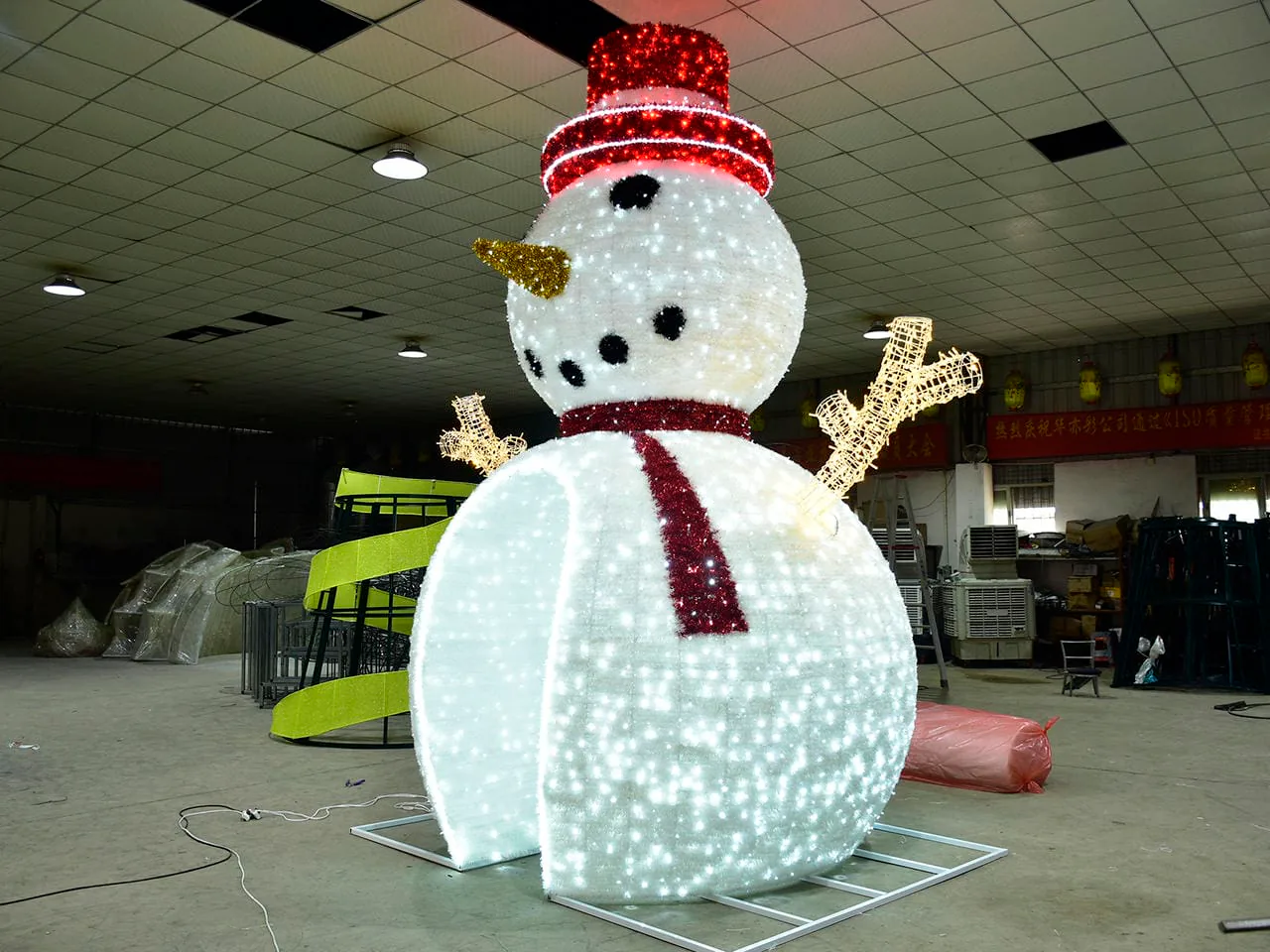
How to measure the window and set the right scale
A common mistake is selecting a piece by its catalogue height without relating it to the window and the viewing distance. Two measurements matter: the proportion of the glass the piece occupies, and the angle at which a moving pedestrian sees it. As a starting rule, a hero motif commonly occupies roughly one to two thirds of the visible height, leaving clear space around it so the eye can settle; filling the entire glass usually feels cramped and hides the brand.
Record the window’s internal width, height and usable depth, the height of the sill and any mullions or bars that cross the view, and the distance from the glass to the nearest point of the pavement where shoppers slow down. Mark these on a simple elevation drawing, then place the motif, merchandise and signage to scale. Mullions should be treated as fixed visual boundaries: a face or logo split by a mullion reads as two broken images, so centre key elements within a single pane.
تحقق من المظهر والأضواء مطفأة
An evening photograph does not show the whole buying decision. During daytime trading, customers see the frame, decorative covering, colour, rear face and supports more clearly than the illuminated effect. Request both an unlit and an illuminated view of a proposed piece, and compare whether it still reads as a star, snowflake, gift or other intended form when it is not glowing.
If the display is viewed from inside the store, inspect the rear appearance rather than relying on a front photograph. An exposed light frame rarely looks like a finished sculpture in daylight, so for an all-day display specify finished rear and side surfaces or position the piece where the frame is hidden.
اختبر التكوين من خلال الزجاج ليلاً
At night, inspect the display from outside with the shop lighting in its normal operating state. Move from a front view to both approaching side views and check the holiday motif, the featured merchandise and the brand sign together. If reflected lights make the composition confusing, change the position, background or lighting before ordering more fixtures.
Take ordinary phone photographs as an additional check. A close-up supplied by a manufacturer and a street-view photograph of the whole window answer different questions, and neither a rendering nor a studio lighting photograph certifies the final installation.
احرص على إبراز البضائع والعلامة التجارية
Reserve the important sightlines before adding secondary decoration. A gift motif at the front can conceal a product behind it, and hanging elements can visually cross a logo even when they occupy little floor space. Keep the palette and number of focal elements consistent with the brand and the surrounding storefronts; density should follow the setting and purpose rather than a universal spacing formula.
Installation, power and maintenance
Ask the property team which fixing locations are permitted and whether the display is entirely inside the building or includes exposed exterior elements. Do not assume the glass can carry a decoration, or that a product suited to one fixing method suits another. A typical internal window build follows this sequence:
- Confirm the elevation and approve the to-scale layout with merchandise and signage positions.
- Install the backdrop and any mounting points on the rear panel or floor, never on the glass unless it is engineered for it.
- Fix the motifs and run low-voltage cables neatly to a hidden driver or socket.
- Dress and conceal cables so they do not cross merchandise or sightlines.
- Test at the normal viewing times, both lit and unlit, and adjust brightness and angle.
- Label modules and connections for cleaning, merchandise changes and reuse next season.
Leave access for cleaning and maintenance and confirm how a technician can reach the relevant connections. Fixing, electrical supply and any required approvals must be resolved for the actual site and selected product; a visual layout is not an installation specification. For a window that forms part of a larger shopping-centre scheme, coordinate the work with the centre’s guidelines using our دليل تزيين مراكز التسوق بمناسبة عيد الميلاد.
ما الذي يجب إرساله لإجراء مناقشة أولية حول التصميم
Provide a straight-on photograph and photographs from the main approaching directions, plus a view from inside if the back of the display will be seen. Mark the window dimensions, usable depth, mullions and the positions of merchandise and signage that must stay visible. Tell the supplier whether the display needs to work by day, at night or both, and show the existing lighting where possible. A structured list of the details to include is given in our قائمة مراجعة المشتريات.
الأسئلة الشائعة
أيهما أفضل للواجهة التجارية: الزخارف المسطحة أم ثلاثية الأبعاد؟
لا يُعتبر أي منهما أفضل تلقائيًّا. فالأشكال المسطحة وذات المخطط المفتوح أسهل في الترتيب في واجهة عرض ضحلة، في حين أن القطع ثلاثية الأبعاد تحتاج إلى عمق كافٍ لاستيعاب التمثال والدعامات والبضائع ومساحة الوصول. قارن بين تصميمات العرض باستخدام الأبعاد الفعلية للواجهة بدلاً من الاختيار بناءً على ارتفاع المنتج وحده.
هل ينبغي تقييم زينة نوافذ عيد الميلاد خلال النهار؟
نعم، إذا كانت النافذة مرئية أثناء التداول النهاري. قم بفحص الإطار، وتشطيب السطح، والمظهر الخلفي، والسلع المعروضة في حالة إطفاء الأنوار، بالإضافة إلى مظهرها المضاء ليلاً.
هل الزخرفة الأكثر إشراقًا تكون دائمًا أسهل في الرؤية من خلال الزجاج؟
لا. تعتمد الرؤية على التباين مع الانعكاسات، وليس على السطوع المطلق. فالتسلسل الهرمي للسطوع الذي يتم التحكم فيه مع خلفية داكنة غالبًا ما يجعل النص أكثر وضوحًا مقارنة بجعل كل عنصر أكثر سطوعًا.
ما هي المعلومات التي من المفيد معرفتها قبل طلب تصميم؟
يرجى إرسال صور للواجهة والجانب المواجه للمحل، وعرض النافذة وارتفاعها، والعمق القابل للاستخدام، ومواقع الأعمدة الفاصلة، بالإضافة إلى البضائع واللافتات التي يجب أن تظل مرئية. يرجى توضيح ما إذا كان العرض يُستخدم نهارًا أم ليلاً أم كليهما.
ما هي درجة حرارة اللون التي ينبغي أن أختارها؟
استخدم اللون الأبيض الدافئ (من 2700 كلفن إلى 3000 كلفن تقريبًا) لإضفاء جو تقليدي ودافئ، واللون الأبيض المحايد إلى البارد (من 4000 كلفن إلى 6500 كلفن) لإضفاء مظهر عصري وحيوي. حافظ على درجة حرارة لونية موحدة عبر النافذة ما لم يكن التباين اللوني مقصودًا.
How big should the main decoration be?
A hero motif commonly occupies about one to two thirds of the visible window height, leaving negative space around it. Confirm the scale on a to-scale drawing that includes the viewing distance, mullions and the merchandise that must remain visible.